Reliable IV Infusion Therapy to Help Seniors Recover and Stay Healthy at Home.
IV Therapy
 By Nurse Next Door January 26, 2026
Around 80% of seniors in the US are living with some type of chronic health issue. These health conditions often make IV infusion therapy unavoidable for them. However, before opting for IV therapy at home, it’s important to understand how risks can be minimized and what to expect. In this article, let’s discuss the role of in-home IV therapy in helping seniors maintain their health and why you should consider reliable home health care agency in Northern Virginia like Nurse Next Door McLean.
What Is IV Infusion Therapy?
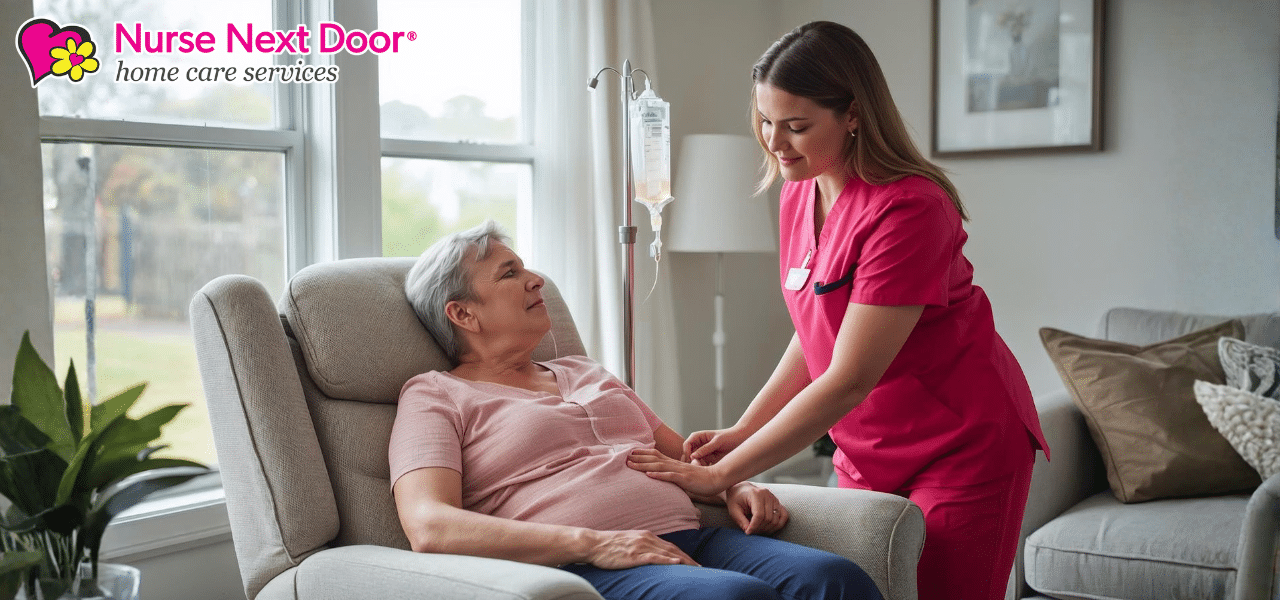
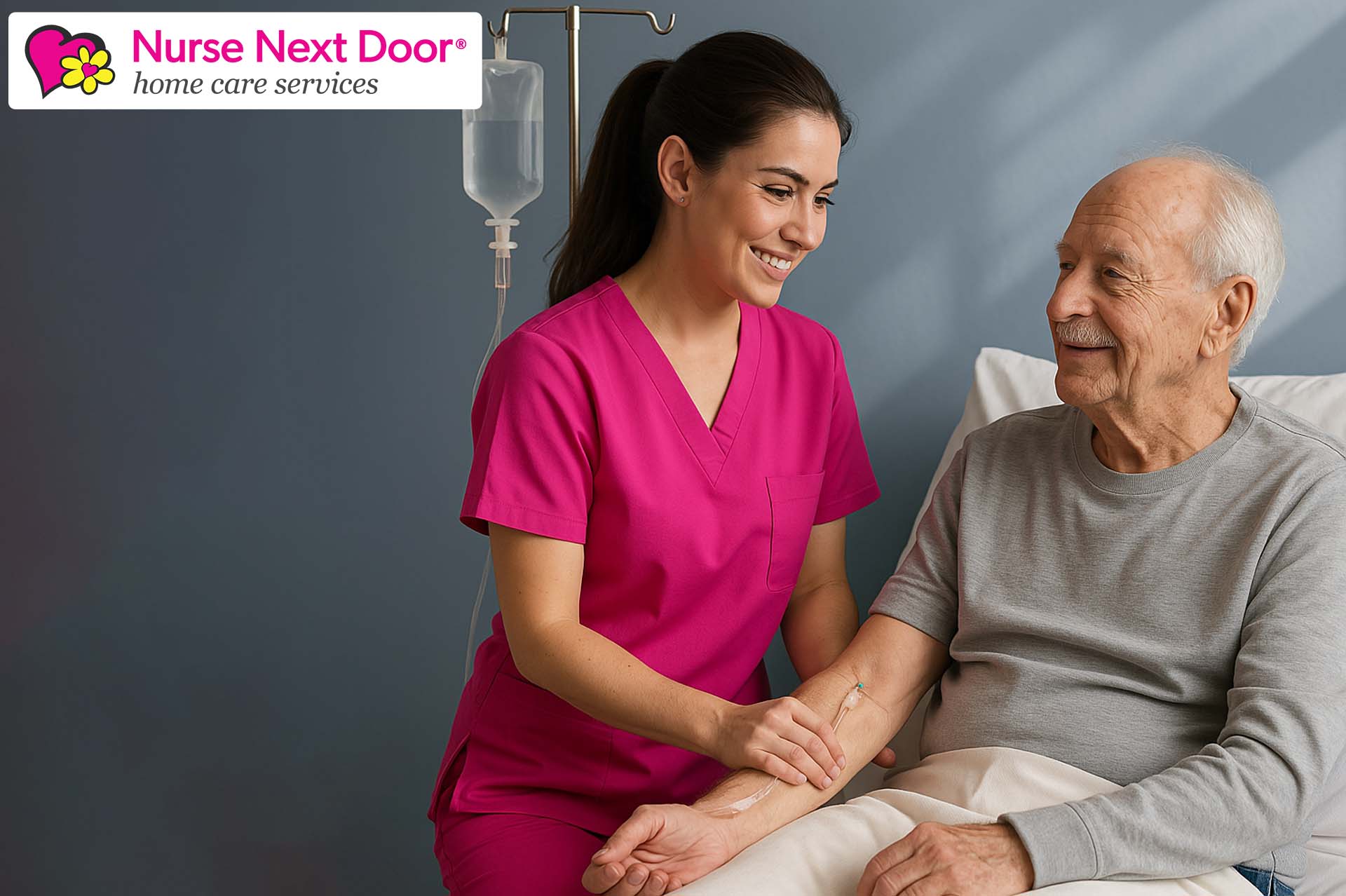
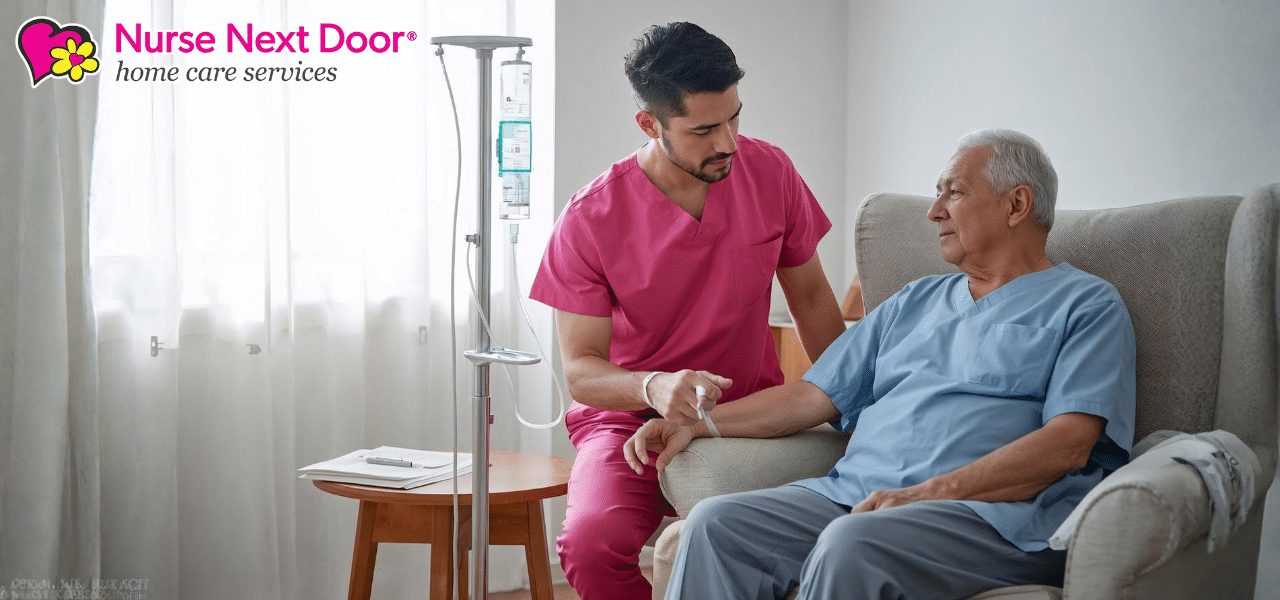
An IV is a small tube placed in a vein – usually one that’s on the inner side of your arm. The purpose is to give you fluids, electrolytes, or medications that are pushed directly into the bloodstream for faster results and higher efficacy. An IV infusion can be administered at the hospital, clinic, or the client’s home by a Registered Nurse (RN). There are multiple types of IV therapies, including infusions for hydration, nutrition, antibiotics, vitamins, or medication.
Why Do Seniors Get Dehydrated Faster?
Seniors tend to eat and drink a lot less and more randomly compared with younger individuals. Secondly, they often take medications for hypertension and other chronic diseases that make urination more frequent and drain water from the body.
What families often notice first isn’t increased thirst. It can be:
- Unusual tiredness
- Dizziness when standing
- Dry mouth
- Darker urine
- Fewer bathroom trips
- Sudden confusion or irritability
Confusion is a very important early sign of dehydration in seniors.
When Do Seniors Need IV Infusion Therapy?
Dehydration Due to Vomiting or Diarrhea
Vomiting sometimes makes it impossible for you to stay hydrated. Whatever goes in comes out instantly as vomit. To prevent kidney damage from dehydration, in such cases, doctors hydrate the body through an IV line instead of pushing for oral intake of fluids.
After Surgery
Around the time when you undergo surgery, and in the early phase of recovery, doctors might limit your oral intake. You might also be under the effect of anesthesia that prevents you from noticing thirst. IV fluids can easily cover that deficit.
Medication
Some medicines are designed for IV use, especially certain antibiotics. You can’t take them orally, so it’s best to rely on IV infusions for them.
What Does a Typical IV Therapy Session Look Like?
A Registered Nurse (RN) asks you about details regarding your health status. They will then check your vitals before placing an IV line. After that, they will start the infusion therapy and keep monitoring you for any possible adverse reactions.
Timing depends on the goal. Simple hydration may take under an hour. Some infusions take longer, especially if medication is involved. Either way, the person should be observed properly.
Common Reasons Seniors Use IV Therapy
Here are common medical situations where IV therapy is used:
- When your oral intake is low due to illness
- Post-surgical support to keep you hydrated
- When antibiotics require IV access
- Diagnosed electrolyte issues that need correction
Side Effects and What Families Should Watch For
Most sessions go smoothly. Still, you and your family should know what can go wrong during an IV infusion. You might see bruising, redness, or swelling around the IV site. In such cases, it’s important to contact the doctor immediately. A professional will be able to monitor a patient for these, too:
- Infection
- Blood clots
- Fluid overload in high-risk patients
A Simple Hydration-at-Home Checklist
This is for everyday support, not emergencies.
- Offer small sips of water more often
- Keep water within easy reach
- Add soups or broths to their diet if appropriate
- Use electrolyte drinks only if recommended
- Watch urine color and frequency
- Observe mood and alertness
- Keep track during hot weather or illness
For many seniors, a little water consumed often works better than asking them to drink a big glass of water.
Consider Nurse Next Door McLean for Reliable IV Therapy
Nurse Next Door McLean makes IV infusion therapy at home for seniors in Northern Virginia. Our Registered Nurses (RNs) ensure your loved one’s safety by adhering to the safety protocols and clinical regulations in Virginia. They follow evidence-based procedures, such as:
- Maintaining hand hygiene
- Using personal protective equipment (PPE) – if there’s a risk of infection
- Administering accurate dosages
- Using sterile IV insertion techniques
- Monitoring for complications
- Tracking vital signs
- Proper medical waste disposal
The Registered Nurses (RNs) at Nurse Next Door McLean are experienced, trained to administer IV infusions, licensed by the Virginia Board of Nursing, and stay updated through ongoing education. We specialize in providing multiple types of IV therapies at home.
Call us today at (703) 774-9421 to book a free Caring Consult.
FAQs
Is IV therapy safe for the elderly?
In many cases, yes. IV fluids are widely used and generally considered low-risk when administered properly. Seniors need carefully calculated dosing and monitoring for heart, kidney, and other concerns.
Which infusion is best for weakness?
It depends on the cause. Dehydration-related weakness may respond to IV fluids.
How can IV infusion therapy benefit seniors?
It can provide fluids or medications when drinking or swallowing isn’t possible.
What conditions commonly lead seniors to IV therapy?
Dehydration, surgeries, infections needing IV meds, and diagnosed electrolyte issues.