Essential Wound Care Tips for Aging Skin
Wound Care
 By Nurse Next Door January 28, 2026
The 5-year mortality rate for seniors with chronic wounds is 31%, which is almost the same as that for seniors with cancer. Aging skin has a different way of dealing with damage. It bruises much faster. It dries out sooner. Older people can get tears from the kind of bump most young people would shrug off.
It means the skin needs a calmer, smarter approach, especially when there’s an open cut, a skin tear, or a sore that won’t heal as quickly as expected. Everyday nicks and scrapes are common for everyone. The bigger issue is what happens next. When you don’t pay attention to a senior’s wound, it gets infected, painful, and difficult to manage. Good wound care doesn’t mean you have to do a hundred things. It’s more about doing the right few things consistently. In this article, we’ll cover what matters most when providing in-home wound care for seniors and why so many people reach out to professional home healthcare agencies like Northern Virginia Nurse Next Door.
Why Aging Skin Needs Special Wound Care
Skin is a barrier against the environment for our bodies. It is a barrier against infections and microbes. When it’s intact, it keeps germs out. A breach in the skin can lead to redness, swelling, pus drainage, and infection.
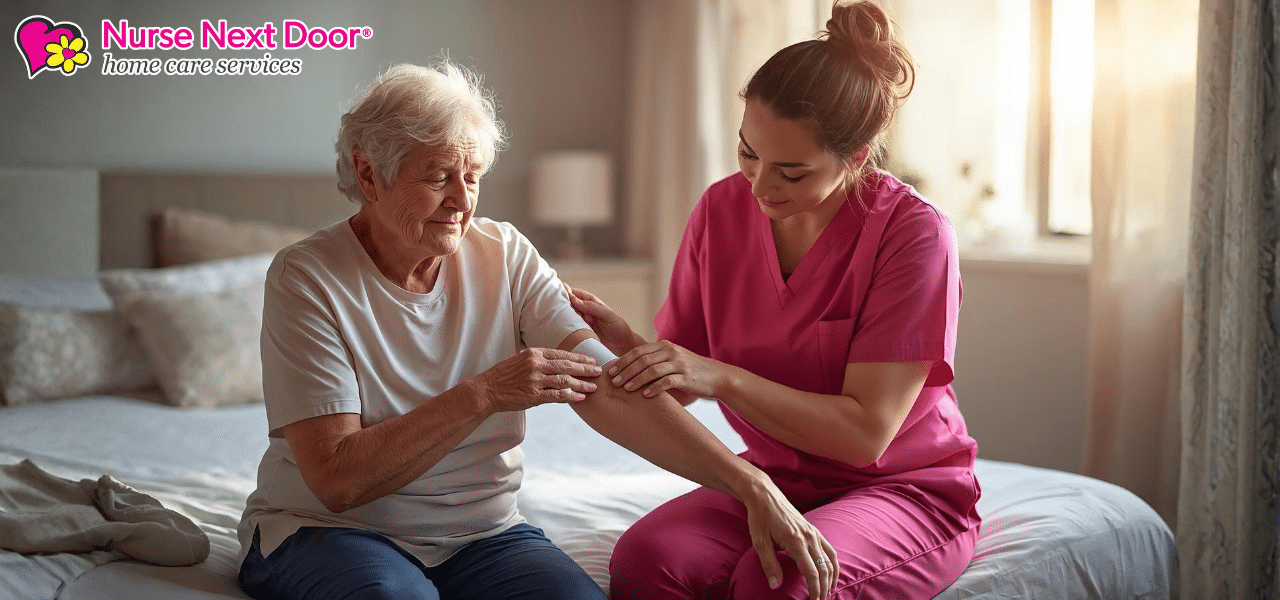
Your skin becomes thinner and loses elastic strength with age. The skin barrier weakens, and it can have less natural moisture, too. That makes it very sensitive to friction and adhesives. Something like a bandage removal can give a senior a new injury. Even rough cleaning can irritate their healthy tissue. Expert wound care for elderly thin skin helps with effective healing and full recovery at home.
Common Types of Wounds in Seniors
Some wounds appear more often with age. There are mobility changes, circulation issues, and just general skin fragility behind these wounds. Skin tears are very common on forearms and shins in seniors. They can happen from a doorframe bump, a wheelchair edge, or even pulling on tight clothing.
Pressure sores can develop in people who sit or lie in one position for long periods. Early on, they may look like persistent redness that doesn’t fade. Over time, the wound can deepen so much that even the bones underneath start showing (grade 4 pressure ulcers). Slow-healing surgical wounds are also very common in seniors because they often lose appetite and get dehydrated or chronically bedridden after surgery.
Essential Wound Care Steps for Safe Healing at Home
Consider following this routine at home when caring for a senior’s wound like during dressing changes:
- Start with handwashing. Clean hands during dressing changes mean fewer bacteria get into the wound.
- Stop the bleeding, if there’s any, with gentle pressure. Then rinse the wound with water. No scrubbing. Pat the area dry instead of rubbing it against anything.
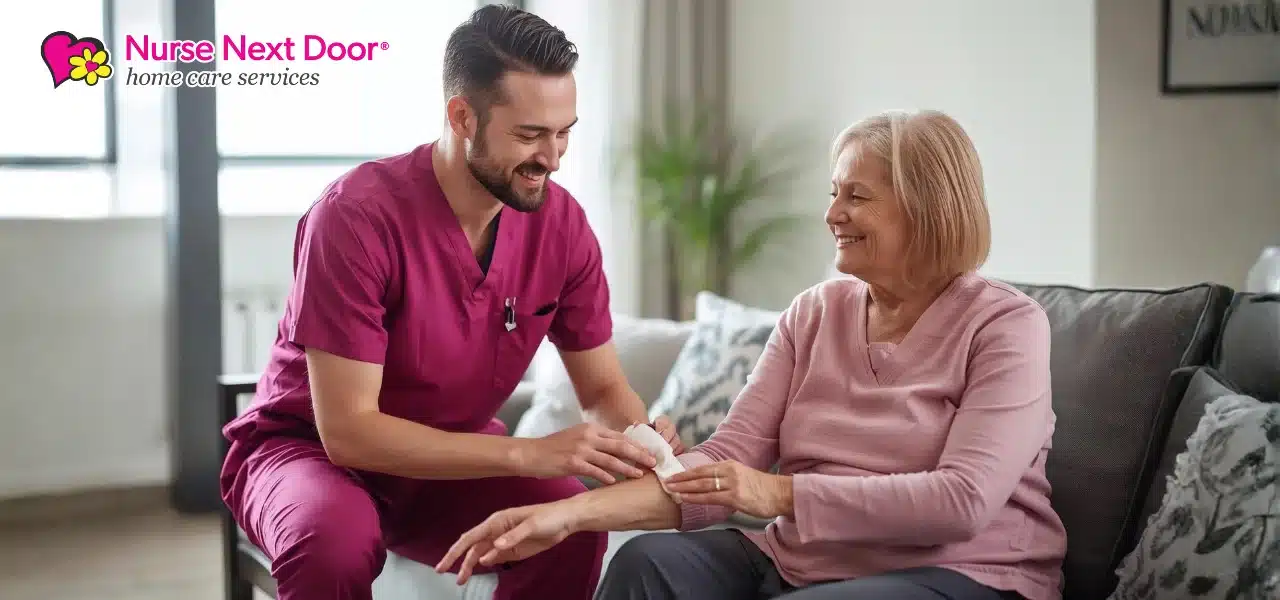
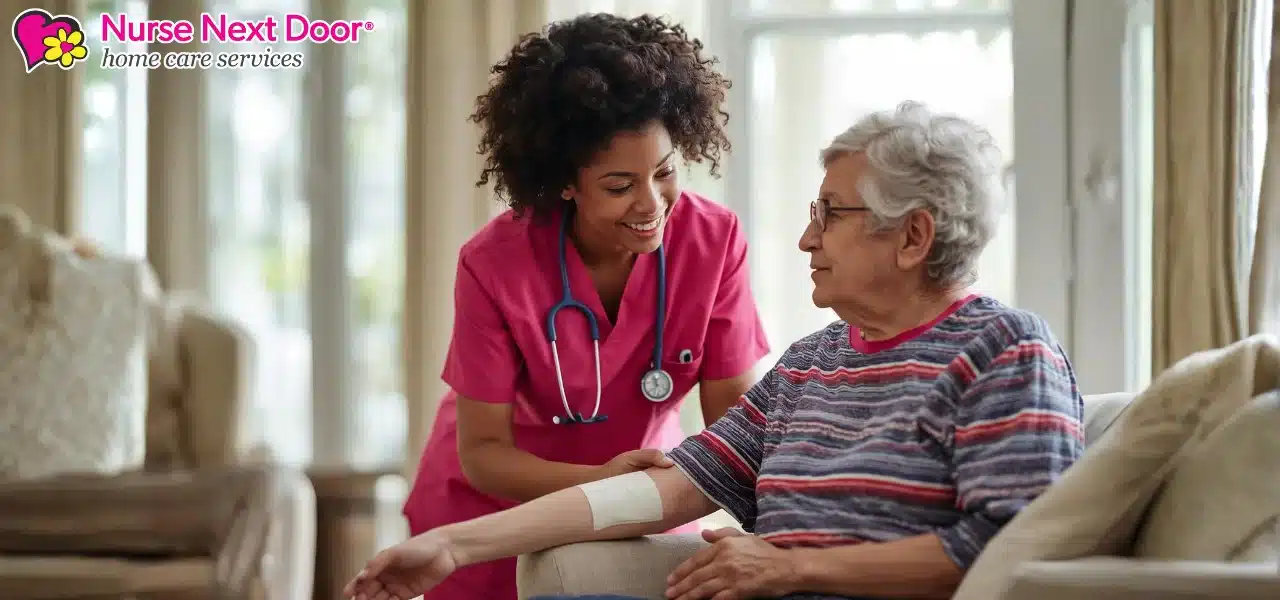
- Cover the wound with a sterile but non-stick type of dressing, like paraffin-soaked gauze. It can help with protection against friction and bacteria. If the dressing becomes wet or dirty, change it.
- The dressing change is the time when you note any changes in the wound. Check for changes in color, any new swelling, smell, or pus drainage. If something looks worse rather than better, it’s time to call in professional help or go to a doctor.
How Do Total Wound Care Solutions Ensure Full Recovery?
Wound Care for Elderly Thin Skin: Prevention Tips
Prevention is way easier than a cure in this case:
- Start by reducing friction. Skin tears often happen from rubbing and pulling. Use soft clothing. Keep your nails trimmed. You should move with a lot of care during dressing changes.
- Sticky adhesive tape? Make it wet before you take it off. Peel slowly and support the skin with your other hand.
- Moisture balance matters. Very dry skin cracks. Overly damp skin breaks down. Regular moisturizing helps, but avoid applying products directly to a wound. If you really need to, get a doctor’s note for something that’s safe.
- Senior proof your home. Sharp corners, cluttered walkways, and tight spaces? Big no. All of this will increase bumps and scrapes for a senior. A few small home adjustments can prevent repeated injuries.
When Do You Need a Wound Care Nurse’s Assistance at Home?
You don’t have to wait for a crisis to ask for help. Immediately call a professional when:
- The wound is not improving
- Dressing changes are painful or causing new skin injury
- Pus or fluid drainage from the wound increases
- Redness is spreading
- The person has diabetes, circulation issues, and reduced sensation in the area.
It’s also wise to get help if there are signs of infection, including pus-like drainage, a bad smell, swelling, increasing warmth, fever, or worsening pain. A wound care nurse does more than just change the dressing. They assess healing, protect surrounding skin, and adjust the wound care plan if needed.
Consider Nurse Next Door McLean
Healing at home means juggling so many things at once. We can help with senior wound care at home for families in Northern Virginia. When a wound is slow to improve or looks concerning, you should consider opting for expert wound care services. Northern Virginia Nurse Next Door specializes in providing in-home wound care for various types of wounds, including chronic wounds, burns, pressure sores, diabetic ulcers, and surgical wounds. Our RN are trained to use advanced techniques like Negative Pressure Wound Therapy (NPWT). From monitoring the wound for healing and warning signs to pain relief, our wound care services are comprehensive, ensuring healing and full recovery at home. We take extra care to safely dispose of biohazardous materials, such as removed dressings and cleaning swabs, according to state policy.
Call Northern Virginia Nurse Next Door today at (703) 774-9421 and we’ll match you with the most suitable, trained, and experienced Registered Nurse (RN). Let us take care of the dressing changes and ensure healing.
FAQs
Why does aging skin need special wound care?
It loses the elasticity and tensile strength it once had and gets injured easily.
What are common types of wounds in older adults?
Skin tears, pressure sores, and slow-healing surgical or chronic wounds are way more common in seniors than young people.
What is the best skin care routine for aging skin?
Consider gentle cleansing and regular moisturizing. You must also senior-proof your surroundings to reduce friction and pressure.
How to manage skin tears in the elderly?
Wash and clean the wound gently with saline. Cover it with a non-stick dressing. Finally, call a professional to examine it and guide you if it doesn’t heal in 2 days.