Home Care vs Assisted Living: Which Option Is Better for Seniors?
In-Home Care
 By Nurse Next Door February 12, 2026
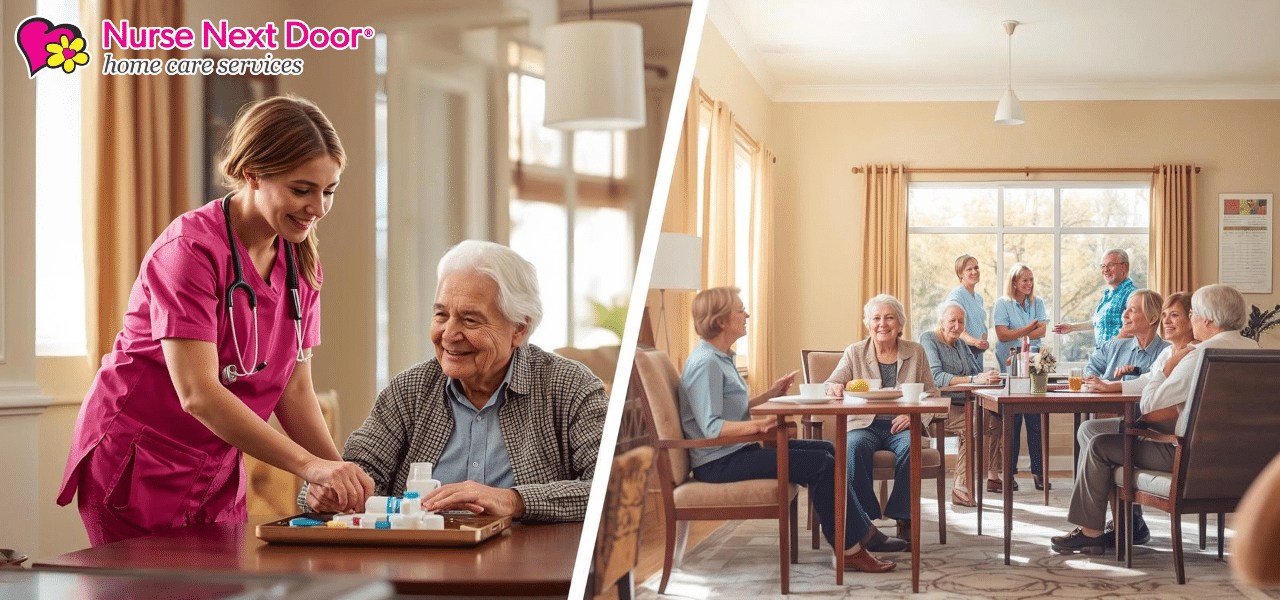
According to Harvard Health, two out of every three seniors in the US need assistance with one or more daily activities, such as personal hygiene, getting dressed, cooking, or maintaining their home. But exactly how to get that help is the question.
Is it better to bring in professional home care services for seniors or move into an assisted living facility? As part of our commitment to supporting safe and successful aging in place, Nurse Next Door takes a closer look at home care services for seniors in Mclean versus assisted living for seniors. We hope you use this article to make an informed decision for your loved ones.
Overview of Home Care Services for Seniors
Non-medical home care primarily focuses on helping seniors perform the activities and tasks of daily life. This could include:
- Personal hygiene and grooming
- Getting dressed
- Using the toilet
- Meal preparation
- Light housekeeping
- Mobility support
- Transportation to appointments and errands
The best home care services empower seniors to do as much for themselves as they can, while supporting their continued independence. When things get too difficult or too unsafe, caregivers lend a compassionate hand.
Overview of Assisted Living for Seniors
Assisted living facilities and communities are designed for seniors in the US who require help with ADLs but do not need 24-hour medical attention. These kinds of communities offer homelike settings with seniors paying monthly rent and additional fees determined by the level of care provided. The range of services may include personal care, periodic monitoring, meals, transportation, and social activities.
Cost Comparison: Home Care vs Assisted Living for Seniors
In general, home care services for seniors are considerably less expensive than assisted living communities. The first factor in the price difference is that residents of an assisted living community for seniors pay monthly rent, on top of any other services they may receive. Compare that to in-home senior care, where seniors may own their home outright, with no monthly mortgage or rent payment.
The biggest controllable expense that separates the two options is that home care services for seniors can be customized to the unique needs of the individual, and those services can be offered full- or part-time. With senior home care, you only pay for what you need and when you need it.
Quality of Life Considerations
There’s a huge difference between aging in place at home and moving into an assisted living community. With home care, the senior remains in a familiar environment where they have built a life and made memories. They are surrounded by their favorite things, they know the neighborhood, and they probably have an established routine. This last consideration is especially relevant for people in the early stages of Alzheimer’s or other forms of dementia.
Life in an Assisted Living Community
Assisted living for seniors is literally a whole new world. They are now in an unfamiliar place, surrounded by people they don’t know. This can be confusing and even a bit scary.
Freedom vs Fewer Choices
Living at home means retaining as much control as possible. The senior is in their house, after all, so they have more of a say about their daily life. By definition, an assisted living community affords residents less privacy, offers them fewer choices, and gives them more rules to follow.
From noise control to dress codes to limited hours for available transportation to limited menus and even shorter visiting hours, some seniors may find it difficult to hand over that much control and have to live by someone else’s rules at this stage in their lives.
Safety and Supervision
Assisted living for seniors means being constantly monitored, both directly and indirectly. Facilities are responsible for a general awareness of each person’s whereabouts at all times, and they must observe the residents’ activities throughout the day. For all the positives, many seniors bristle at having to check in with staff, feeling it is just more erosion of their own independence.
Safety is the most important thing when providing home care services for seniors, but that doesn’t have to come at the expense of autonomy and independence. In-home care services can be tailored to match the capabilities, mental state, medical needs, and lifestyles of seniors and their families. This means more privacy, more control, more independence, and more dignity.
Impact on Family Caregivers
Caring for a senior loved one may put a tremendous burden on your family. It is an intense commitment of time, finances, and mental and physical energy. Home care services for seniors ease that burden by shouldering as much of the load as necessary. Nurse Next Door McLean’s caregivers can handle the specific tasks that your family might find difficult, and they can do it on your schedule. Our caregivers are available part-time, full-time, or around-the-clock. We provide care at any time of day, including nights, weekends, and holidays.
Reduced stress means less impact on your emotional and physical health. It also means you are better able to spend meaningful time with your elderly family member. Assisted living for seniors helps with family caregiver burnout as well, but at a trade-off. You are no longer a partner in caring for your senior, because you’ve given that responsibility to the facility staff. That can be emotionally difficult for many families.
Nurse Next Door McLean Is Your Trusted Alternative to Assisted Living for Seniors
Whatever level of care your loved one needs, Nurse Next Door McLean is here for you and your family. We offer customized home care plans, flexible scheduling that fits your lifestyle, and compassionate, personalized attention. Our home care services for seniors support safe and healthy aging in place, where your loved one feels most comfortable, with privacy, dignity, and independence. Nurse Next Door McLean can improve your loved one’s quality of life with a range of skilled and non-skilled home care services in Northern Virginia.
Call us today at (703) 774-9421 to book a free consultation.
Frequently Asked Questions
Which option is more cost-efficient for seniors?
Generally, home health care for seniors is more affordable than assisted living, as there’s no monthly rent, and you receive flexible care plans.
How do families decide between home care and assisted living for seniors?
By weighing various factors, like cost, convenience, services, safety, amenities, comfort, preferences, and family needs.
What is one of the biggest drawbacks of assisted living?
Loss of independence and control over daily life is the biggest drawback of opting for an assisted living facility.