Safe In-Home IV Infusion Care Services in Oakton, VA
IV Therapy
 By Nurse Next Door March 2, 2026
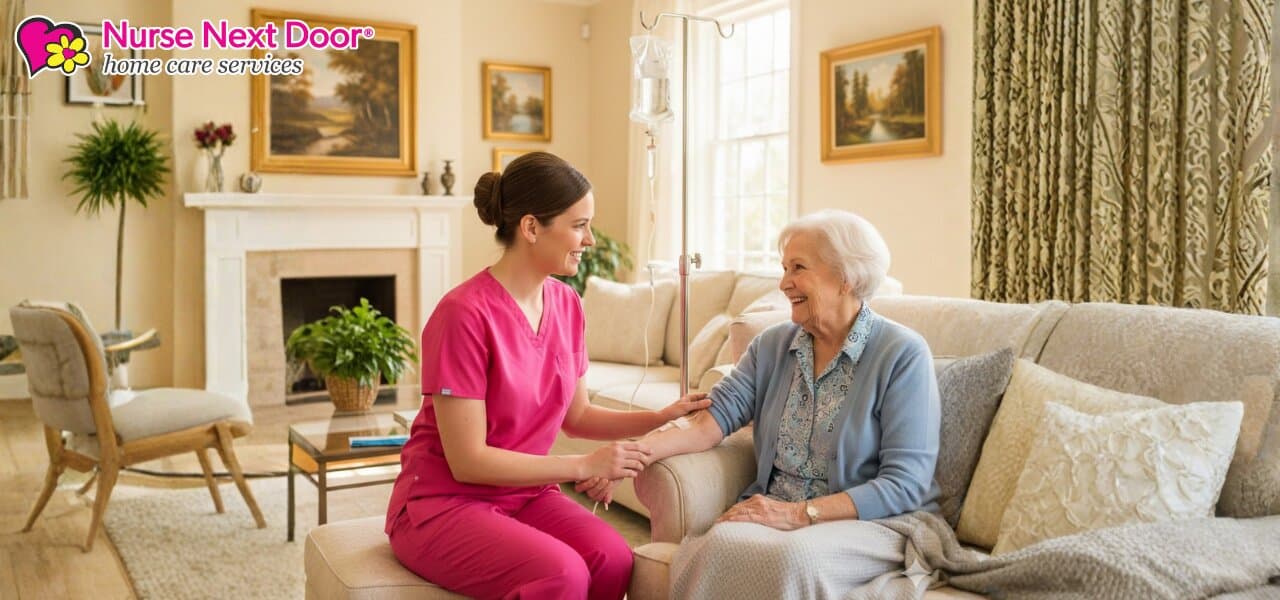
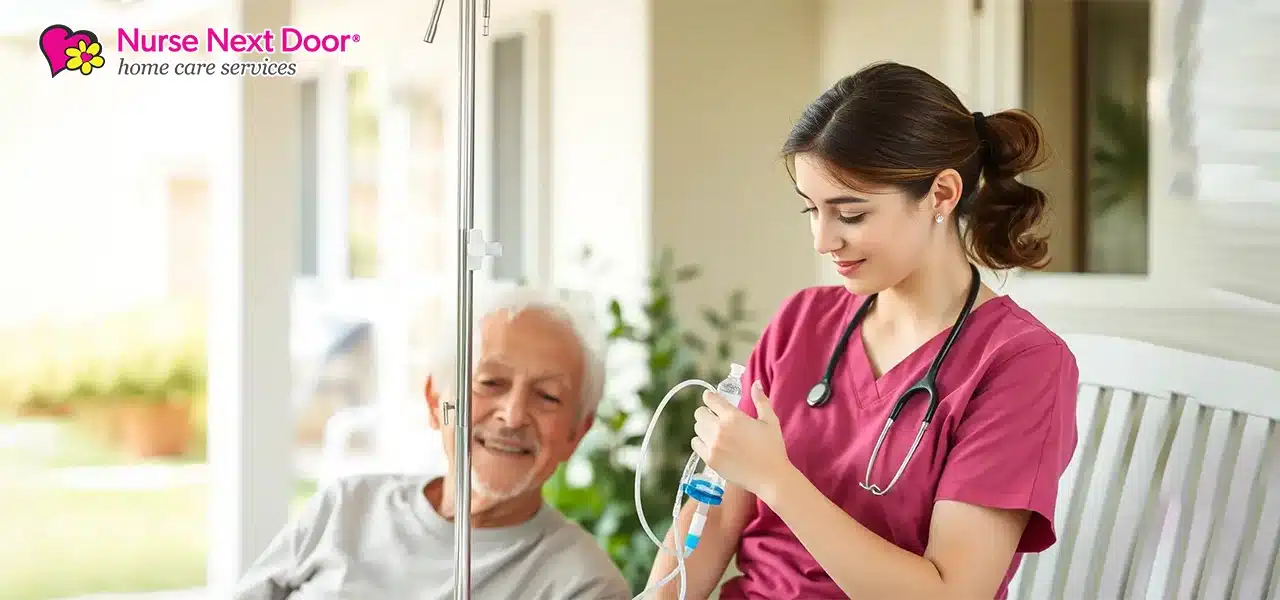
Long gone are the days when IV infusion could only be administered at a hospital or clinic. Today, your loved one can safely undergo various types of IV therapies at home. Studies indicate that approximately 3.1 million people in the US receive IV infusions at home. In this article, we’ll discuss various types of IV infusions, their benefits, and how Nurse Next Door McLeans ensures safety while administering IV therapy at home for seniors.
What Is IV Therapy and When Is It Medically Necessary?
During IV therapy, fluids, medication, or nutrients go directly into your bloodstream through a small catheter. Doctors prescribe IV therapy when orally given pills aren’t fast or effective enough for the condition you have.
Common Types of IV Therapy Services for Seniors
Hydration therapy is the most common type of IV therapy for seniors, as they often don’t drink enough water. Sometimes they forget to drink water, and there are times when they can’t even tell that they’re thirsty. Antibiotic infusions are also very common in the elderly. They tackle serious, chronic infections that won’t go away with pills. For example, UTIs that keep coming back. IV antibiotics are more effective and work faster than pills.
Immunotherapy delivers medication for immune system disorders. For example, IVIG (intravenous immunoglobulin) is administered for autoimmune problems and certain nerve disorders. A few decades ago, you’d have to go to a hospital for these IV infusions, but now they can be received through IV therapy at home.
Can In-Home IV Hydration Therapy Cure Your Dehydration and Fatigue?
Comfort is the most obvious benefit when we talk about IV therapy at home. You’re at home, and you have your chair, TV, and bathroom. These details may seem small, but when you’re sick, these little things matter way more. With this approach, infection risk drops significantly too. At a hospital, you’re surrounded by people with other illnesses. In-home IV therapy helps you avoid infections that other patients may be carrying and spreading.
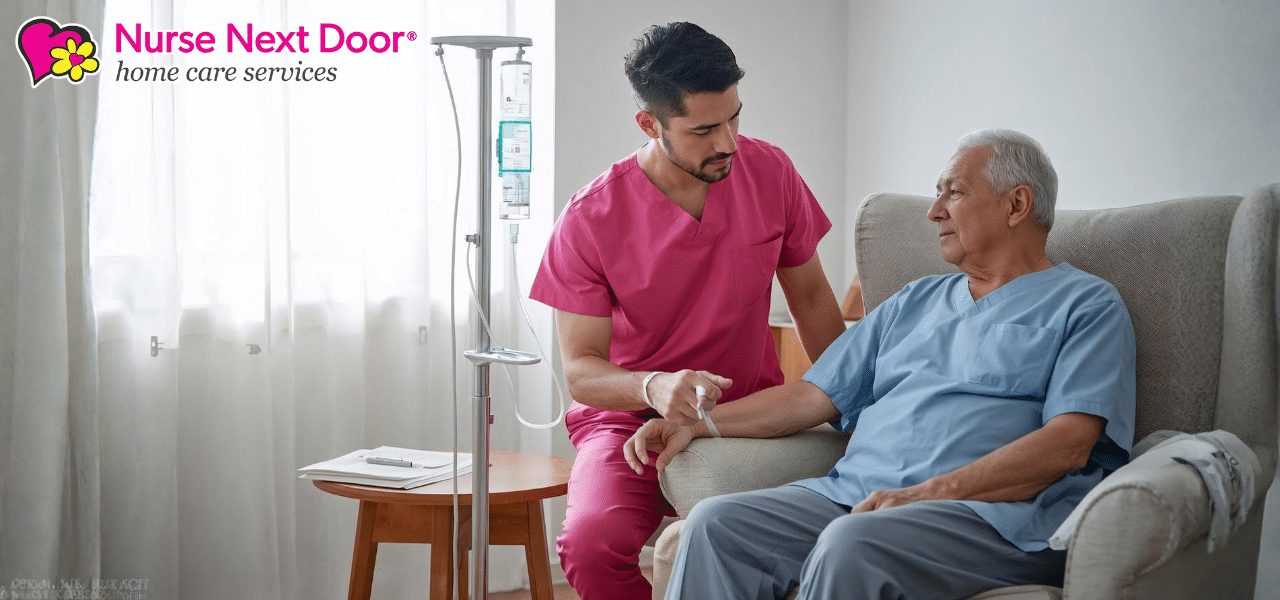
The convenience is also huge. There’s no driving, and you won’t have to sit for a long time in a waiting room. The Registered Nurse (RN) shows up at your home, administers the infusion safely, monitors you, guides your family, and then leaves. Additionally, the care is more personal. Hospital nurses might have four or five patients. At your house, you’re the only one.
Safety Considerations and Potential Risks of IV Therapy
In-home IV therapy is safe, but only when the person administering it knows what they’re doing. Infection is the main worry. If the IV cannula isn’t kept clean, bacteria can get into your blood. That’s why Nurse Next Door McLean’s Registered Nurses (RNs) follow sterile procedures and the State’s safety guidelines every time.
Another issue to monitor for is extravasation, which involves fluid leaking into the tissue around the vein. It causes swelling, and it’s uncomfortable, but it’s not really dangerous. Trained and experienced RNs know how to address such issues. Allergic reactions don’t happen often, but there’s still a slight risk. That’s why you need to be monitored by a trained RN the whole time.
Who Should Use Caution or Avoid IV Therapy?
Heart failure that’s really severe can make the administration of IV fluids complicated. Too much fluid risks overwhelming the heart. IV fluids need extra monitoring in these cases. Kidney problems need more caution as well. Kidneys filter the things in your blood, so overwhelming them is not good. You can still get an IV infusion, but it just has to be done carefully. Those who take blood-thinning medications may face more bleeding or bruising. In such cases, the RN needs to be extra careful.
How Nurse Next Door McLean Provides Safe and Effective IV Therapy
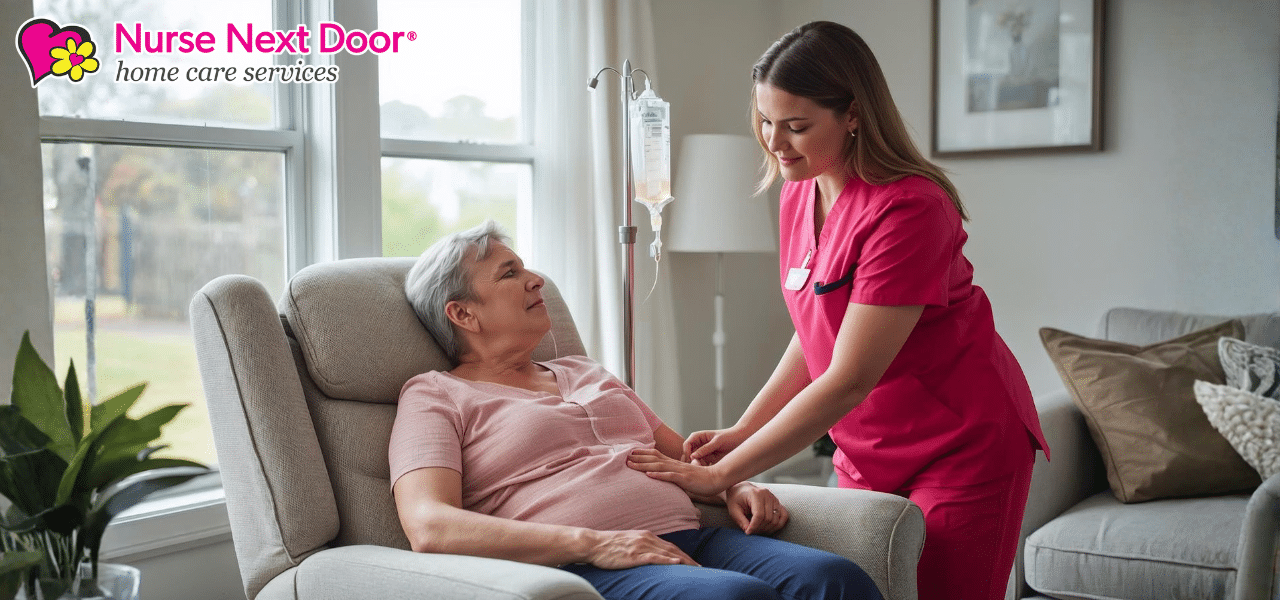
IV therapy starts with an assessment by a Registered Nurse (RN), considering your doctor’s orders, medical history, other medications, allergies, etc. The RN keeps monitoring throughout the IV infusion, checking vitals, watching for reactions, and making sure the flow rate is right.
Nurse Next Door offers multiple types of in home senior care services in Mclean, including IV antibiotics and infusions for hydration and nutrition. Our RNs are trained and experienced and follow all state safety protocols, such as hand sanitization and disposing of the waste material properly. If your loved one needs IV therapy at home.
Call us at (703) 774-9421 today.
FAQs
What are the three most common types of infusions?
- Hydration therapy (saline and fluids)
- Antibiotic infusions
- Immunotherapy (e.g., IVIG for autoimmune conditions)
What are the negative effects of IV drip?
There can be a risk of infection, infiltration (fluid leaking into tissue), allergic reactions to medications, and phlebitis (vein inflammation).
Who should avoid IV therapy?
People with severe heart failure, advanced kidney disease, or a history of severe allergic reactions need extra caution. Most heart patients are on blood thinners, and they also need supervision.
What kind of therapy is best for the elderly?
In-home IV therapy is often best for seniors. These services eliminate the stress of transportation, minimize the risk of infections, and provide personalized one-on-one care.