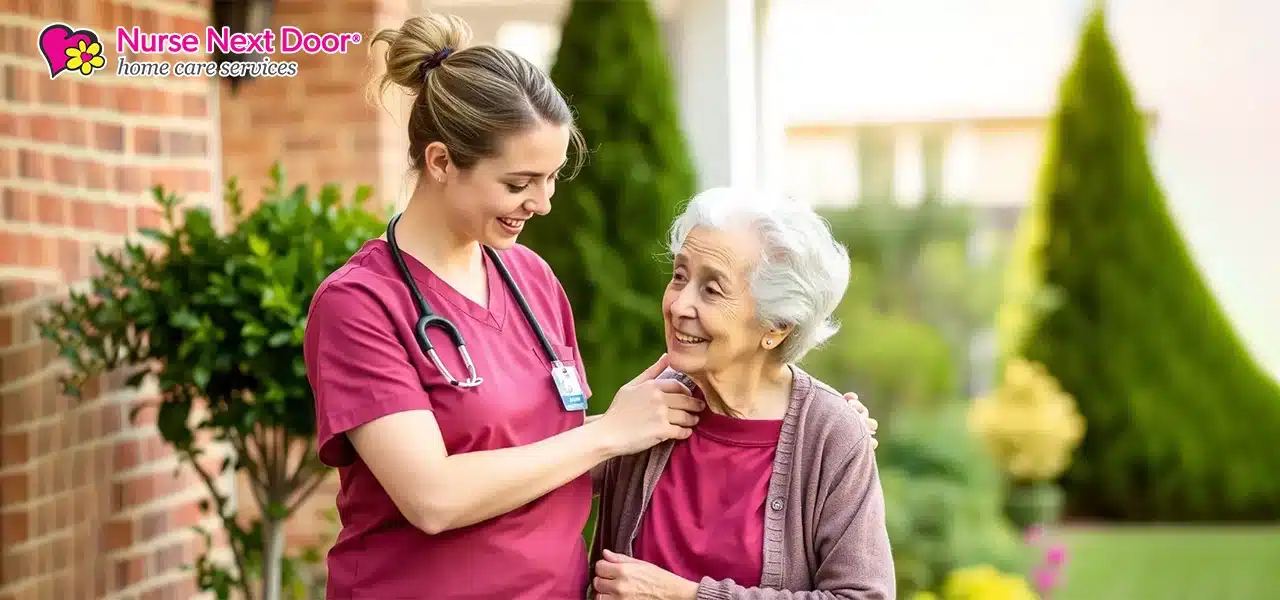
What Should Families Know About Alzheimer’s and Dementia Care at Home?
Dementia Care
 By Nurse Next Door February 5, 2026

Currently, 7.1 million Americans struggle with Alzheimer’s disease and other forms of dementia. That number will nearly double within a generation. The likelihood of dementia increases as we age. After age 55, the lifetime risk is 42%, but it jumps to 56% for those who are 85 years old.
For affected individuals and families, dementia is a significant health concern that takes an enormous toll mentally, physically, emotionally, and financially. In this article, we’ll explore senior memory care and how Nurse Next Door McLean’s services can improve your loved one’s quality of life.
Understanding Alzheimer’s Disease versus Dementia
Dementia is an umbrella term for a decline in cognitive ability severe enough to interfere with a person’s daily life. This general term is used to describe various conditions and symptoms. Alzheimer’s disease is a specific and the most common cause of dementia, accounting for up to 80% of the cases. It is characterized by progressive cognitive and physical decline and memory loss.
Symptoms of Dementia and Alzheimer’s Disease
Although some changes in memory are common as we get older, dementia-related conditions are not a normal or inevitable part of aging.
Aging and Memory
Normal age-related memory changes might include occasionally struggling to find the right word or sometimes misplacing their car keys. In other words, your overall brain functions, thoughts, and memory stay generally intact, including your ability to use language, recall old memories, and the experiences and knowledge you have accumulated over your lifetime.
Symptoms of Dementia and Alzheimer’s Disease
Dementia-related conditions are characterized by severe cognitive and memory lapses.
- Using the wrong words when referring to familiar objects
- Getting lost in familiar places
- Forgetting the names of friends and family
- Losing old memories
- An inability to complete common tasks of daily life
- Physical decline
Stages and Levels of Care
Unfortunately, these conditions are progressive, which means they are incurable and they always get worse. With each stage, the symptoms demand a higher level of care.
Early/Mild Stage
Symptoms include difficulty concentrating, memory loss, and trouble with problem-solving.
At this stage, seniors still largely function independently, but they may start forgetting recent conversations and events.
Middle/Moderate Stage
Characteristic symptoms include increased confusion and memory loss, to the point of changes in behavior and mood, and difficulty remembering familiar people.
People with moderate dementia/Alzheimer’s typically require assistance with one or more Activities of Daily Living.
Late/Severe Stage
As they enter the final stage, seniors may lose their ability to respond to their environment or even communicate. They require full-time in-home care and may eventually lose basic bodily functions such as swallowing or drinking.
What is Dementia Home Care?
Senior care for dementia is a specialized branch of home health services. Professional caregivers adjust their level of care to meet the demands of the current stage. Typical services include:
- Home safety evaluation and recommendations
- Companionship and monitoring
- Assistance with ADLs
- Senior memory care, including games and activities
- Establishing routines
- Reducing anxiety and aggression
- Family support and education
The Importance of Routine and a Familiar Environment
Dementia patients often exhibit behavioral problems such as agitation or aggression at some point. This is caused by cognitive confusion that impairs their ability to fully understand what is happening around them.
One of the best ways that senior memory care decreases the frequency and intensity of these episodes is to establish a daily routine. Familiar structure comforts seniors with Alzheimer’s disease and helps them feel safer in a world that makes less and less sense. Specific examples include regular times for waking, going to bed, naps, meals, and favorite activities. Other strategies might be to keep necessary and/or favorite items in plain sight, so the person always knows where to find them. When they know what to expect and when to expect it, they’re less likely to act out.
Focusing on a Safer Home Environment
The top priority of dementia care for seniors is to keep the person safe. There are several strategies that expert professionals who specialize in senior memory care employ.
Home Modifications
Changing the layout of the home can prevent falls and other accidents.
- Throughout the house, eliminate clutter and remove tripping hazards. Ensure that there is plenty of soft lighting.
- Secure or get rid of dangerous items such as knives, cleaners, medications, alcohol, power tools, and firearms.
- Install safety latches and knobs on cabinets and drawers, and consider removing the dials on the stove. Make sure that smoke and carbon monoxide monitors are in good working order.
Prevalence of Wandering in Dementia Patients
Seniors with dementia tend to wander off, with many of them repeating the behavior multiple times. Wandering can be dangerous or even life-threatening, and it is intensely stressful for family caregivers.
Wandering is caused when the person is confused about their location. They may forget how to get to or from formerly familiar places. They may try to go to work if they are retired, or they may try to go home when they are already there.
Reducing the Risk of Wandering
Senior care for dementia employs specific strategies to protect your loved one. During the early stages, a practical step might be identifying when wandering behaviors are most likely and scheduling extra help at those times.
In advanced stages, other proactive protective measures could include:
- Keeping doors locked
- Installing alarms on entryways
- Labeling rooms in the home with pictures or color codes
- Removing their access to car keys
- Keeping the person meaningfully engaged during the day
- Making sure all their daily needs are met, such as nutrition, hydration, and toileting
- Avoiding busy places or overstimulation
- Sticking to a comfortable, predictable routine
Emotional Support and Social Engagement
According to a recent study, social interaction has a positive effect on people with dementia. Researchers found that engagement leads to reduced depression, less aggression, and more positive emotions. Keeping them involved in activities that are meaningful to them isn’t complicated. Simple activities such as singing, having them tell stories about their life, dancing, taking a walk, or playing memory games are all beneficial.
In fact, the study reports that even such seemingly minor social interactions like hugging, laughing, or involvement in daily activities all make a positive impact on the quality of life of both the senior and their caregivers.
Examples of Senior Memory Care
Home care for seniors with dementia comes with challenges, such as communication difficulties, mood changes, and memory loss that contribute to confusion and anxiety. One of the top strategies employed by the trained caregivers is to involve seniors in memory games that support recall, improve communication, and encourage social interaction.
Examples of engaging games for senior memory care include jigsaw puzzles, card games, board games, word searches, and crossword puzzles, and even video games. Another effective strategy is to employ visual clues. Simple pictures, labels, and color coding can help a person with dementia, even when verbalization becomes difficult. This fosters better communication, reduces confusion and anxiety, and actually helps seniors with dementia enjoy a level of independence.
Managing Aggression and Behavioral Changes
Aggression is nearly universal among seniors with dementia, affecting 96% of patients on at least one occasion. This is where Nurse Next Door Mclean comes in, because we specialize in senior care for dementia, including how to deal with aggressive behaviors.
- Establishing a predictable routine
- Making sure physical needs are met
- Minimizing overstimulation
- Avoiding fatigue
- Calm tone of voice
- Simple words
- Non-threatening body language
- Validation, not correction
Aggression in seniors with dementia is not intentional. It is the result of confusion, anxiety, or the inability to communicate needs.
Our experienced, expert caregivers respond with understanding, patience, and compassion.
Effective Ways to Deal with Aggression in Dementia Patients.
Why Nurse Next Door McLean is Your Best Option for Alzheimer’s and Dementia Home Care
If you are struggling with the challenges of caring for a loved one with Alzheimer’s disease or any other form of dementia, help is available.
Nurse Next Door McLean is a leading provider of senior memory care in Northern Virginia. From companionship care to assistance with ADLs to memory games, we keep your loved one safe and engaged.
To discuss your nee ds and to learn more about our compassionate senior care for dementia, call us today at (703) 774-9421.
FAQs
How is dementia home care different from regular home care?
While both may involve companionship and personal assistance, senior care for dementia requires additional strategies to keep the person safe, healthy, and calm, despite cognitive, memory, and communication issues.
How do I know when home care is no longer enough?
If you are worried about safety issues or violently aggressive behavior, or if they have medical issues linked to the advanced stages of their illness, it might be time to seek additional services.
How can families make the home safer for someone with dementia?
Caregivers can recommend specific home modifications for fall and accident prevention and to deter wandering.
What type of home care services are helpful for seniors with Alzheimer’s or dementia?
Comprehensive senior memory care involves personal assistance, monitoring and safety, establishing a routine, de-escalating techniques, memory games, and emotional support.