How to Care for Alzheimer’s Patients at Home?
Dementia Care
 By Nurse Next Door January 15, 2026
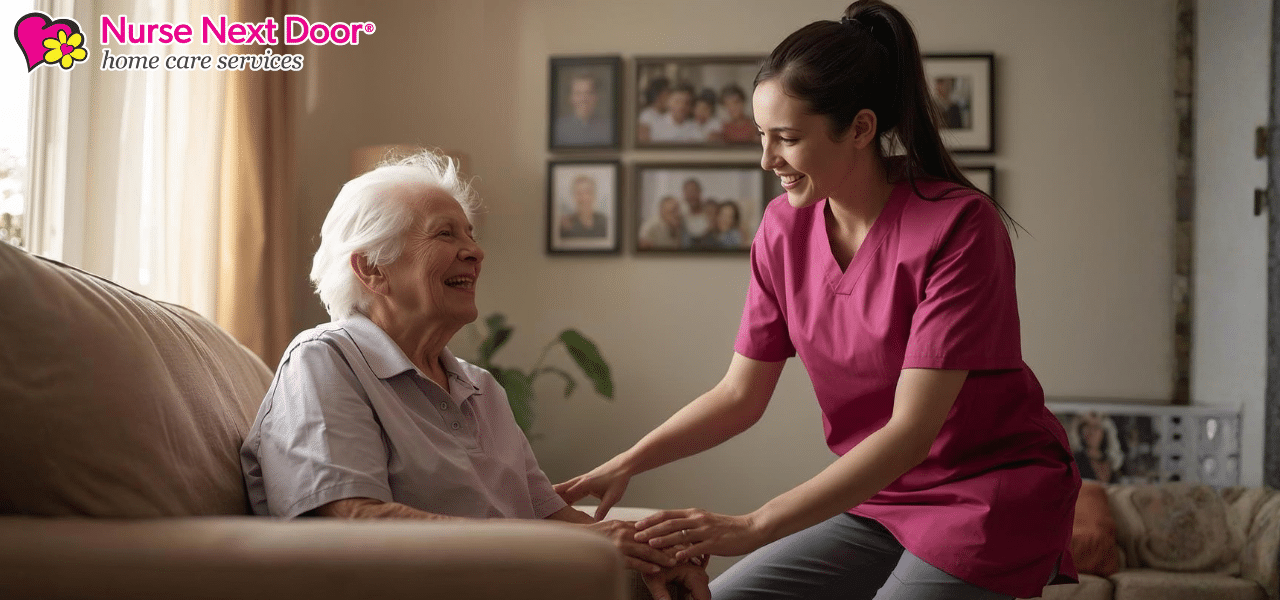
According to a recent report, over 7 million seniors in the United States currently live with Alzheimer’s disease. For those impacted, this diagnosis is accompanied by grief, uncertainty, and fear about what comes next. Many families automatically assume that institutionalization is an inevitability for their loved one, but this is not always the case. With the right professional guidance and support, Alzheimer’s care at home can be a safe, effective, and compassionate option for many families. To help your loved one and family navigate the challenges you are facing, Nurse Next Door McLean offers the following tips on how to care for Alzheimer’s patients at home.
Understanding Alzheimer’s Disease and Its Progression
Alzheimer’s disease is a progressive brain disorder that gradually affects memory, thinking, behavior, and ultimately, the ability to perform daily activities. While every person’s experience is unique, the disease generally progresses through recognizable stages.
Early stage: Mild memory loss, difficulty finding words, misplacing items, and subtle changes in mood and personality.
Middle stage: Increased confusion, sleep disturbances, behavioral changes, difficulty maintaining personal care, and wandering.
Later stage: Significant memory loss, mobility challenges, limited communication skills, and a need for full assistance.
It is important that loved ones and family caregivers understand that as Alzheimer’s disease advances, the level of care must be adjusted to properly meet the person’s changing needs. What might have begun as occasional reminders may eventually require considerable hands-on support throughout the day.
Successful care depends on patience, compassion, flexibility, and a deep and complete understanding that the person’s behaviors are symptoms of their illness, not intentional actions.
Creating a Safe and Supportive Home Environment.
A well-organized, familiar setting plays a crucial role in Alzheimer’s care at home. Consistency helps reduce confusion and anxiety, while appropriate safety measures lower the risk of accidents and injuries.
Key strategies include:
- Removing trip and fall hazards, such as clutter and loose rugs
- Improved lighting
- Painting the walls a lighter color than the floor
- Organizing furniture to maximize walking space
- Setting the water heater to 120 degrees or less
- Labeling rooms, cabinets, and drawers with simple words or pictures
- Locking up/removing from the home dangerous items like medicines, knives, firearms, alcohol, power tools, etc.
- Safety knobs on the stove
- Using smoke/natural gas/carbon monoxide detectors
- Installing locks and/or alarms on doors and windows to prevent wandering
At Nurse Next Door McLean, a Registered Nurse (RN) conducts the initial visit and assessment and then makes personalized recommendations about any modifications and actions that could make the home safer.
The Importance of Routine in Alzheimer’s Care at Home
One of the biggest fears following an Alzheimer’s diagnosis is a loss of independence and control over one’s life. As the disease progresses, the person finds it harder to plan, problem-solve, and sequence daily tasks. Memory loss further increases confusion and anxiety, which interferes with their ability to function independently.
Predictable Routine: This approach reassures the person, provides them with a sense of stability, and most importantly, creates a safe and supportive environment. A regular, dependable schedule lets the person know what to expect each day, thereby reducing anxiety and agitation. Examples might include regular times for waking up, naps, and going to bed, meals and snacks, activities and favorite TV programs, and outings and visits.
Balancing Caregiving with Other Responsibilities: This also empowers your family and allows you to achieve a healthy balance between caregiving and your other needs and obligations. It eliminates unnecessary stress, prevents burnout, and leads to calmer, smoother days and fewer incidents.
Best of all, the professional support and structure provided by Nurse Next Door McLean improve the quality of life of your family. Greater security and peace of mind open up more opportunities for meaningful moments and authentic connections between the person with dementia and their loved ones.
Personal Care and Daily Living Support
A large number of seniors with Alzheimer’s and other forms of dementia have difficulty performing complex Activities of Daily Living (ADLs), such as cooking, managing their medications, or handling their finances.
Common Challenges in Alzheimer’s Disease: Those in the advanced stages of Alzheimer’s disease typically lose the ability to perform self-care tasks such as bathing, using the toilet, getting dressed, grooming, and maintaining personal hygiene. The challenges of having to assist with multiple ADLs can feel overwhelming to many family caregivers. This leads to poorer mental and physical caregiver health, feelings of stress and burnout, and often, worsened care.
How to Overcome the Challenges: The key to providing the best Alzheimer’s care at home is as simple as having the right professional support. Nurse Next Door McLean offers compassionate, experienced personal care that allows your loved one to safely retain their dignity, remain comfortable, and maintain their independence as much as possible and as long as possible.
We do this with personalized care that meets your loved one’s needs and recognizes their capabilities. We support prolonged independence by encouraging them to do as much for themselves as they can, while assisting wherever necessary.
Nutrition and Meal Support for Alzheimer’s Patients
Do you know that over 32% of seniors with dementia face malnutrition? Many Alzheimer’s patients have poor appetites due to their medications, decreased ability to smell and taste, difficulty swallowing, and a lack of physical activity that drives hunger. In the early stages of the disease, they may forget to eat, and cooking can be difficult or even dangerous. In the later stages, they may become unable to feed themselves.
Nurse Next Door McLean helps deliver the kind of personal attention to nutrition that just cannot be found in long-term care facilities for dementia patients. We offer assistance with grocery shopping, meal preparation, and feeding. Above all else, your Nurse Next Door McLean caregiver supports good eating habits by staying positive, patient, and compassionate.
Managing Memory Loss and Behavioral Changes at Home
Watching Alzheimer’s disease slowly claim a loved one exacts a tremendous emotional toll on any family. As the disease progresses, memory loss and confusion can trigger outbursts and problematic behaviors.
How to Deal with Behavioral Changes: The first and most important way to manage difficult behaviors is to create a calm and reassuring environment. Seniors with Alzheimer’s disease do best with stability, predictability, patience, and compassion. This is why establishing a regular routine is so important for the best in-home dementia care.
How Does Redirection Work? When an episode of agitation, aggression, repetition, or acting out occurs, experienced caregivers can employ redirection techniques to shift the person’s attention, calm them down, and de-escalate the situation. This reduces the immediate emotional tension and prioritizes the well-being of everyone involved. Redirection moves the person’s attention away from the fear or anxiety driving their agitation and towards something positive. This may involve offering them a snack, suggesting a favorite activity, or simply moving to another room.
Suitable Brain Games: Another way to manage memory loss and keep the mind sharp and stimulated is to play relevant brain games with Alzheimer’s patients. For example, you can consider jigsaw puzzles, board and card games, crossword puzzles, and even video games.
Caregivers who specialize in Alzheimer’s care at home can take steps to prevent and respond to incidents. Whether it’s soothing words, a gentle touch, or positive reinforcement, they respond with empathy and understanding.
How to Modify the Home for Memory Care Patients
When to Consider Professional Support
Whenever an elderly loved one receives a diagnosis of Alzheimer’s disease or other forms of dementia, it affects the entire family. The natural inclination is to try to do everything you can to take care of them.
Inescapable Practical Considerations: These include making sure their everyday needs are met, managing their medications and meals, handling their hygiene and toilet needs, and generally just keeping them safe from hazards like accidents and falls. Trickier still is accomplishing all of this while maintaining their personal dignity, recognizing their need for as much independence as possible, and preserving your own well-being.
As a family caregiver, you must somehow juggle the needs of your loved one with your own obligations – children, spouse, job, and your physical and mental health. It can seem as if there just aren’t enough hours in the day.
Why Professional Care Matters: Finally, there are the incessant demands of the disease. Dealing with dementia is challenging enough for professionals, let alone for someone without years of specialized training. Some families feel so overwhelmed that they make the difficult decision to look into long-term care facilities for dementia patients. The good news is that in most cases, in-home care can be an appropriate alternative that allows your loved one to age in place with dignity.
There is no shame in saying that you can’t handle it all by yourself. With the right professional help, you can find balance and peace of mind knowing that they are in good hands.
In-home Care versus Long-term Care Facilities for Dementia Patients
To help you make the best-informed decision that is right for your loved one and your family, let’s take a brief look at the differences between in-home Alzheimer’s care and long-term care facilities for dementia patients.
Dementia Care Facilities: They offer full-time supervision, help with ADLs, and medication management. For medical needs, there is typically a nurse on duty who provides services as needed. There are a few downsides. Because long-term care facilities for dementia patients are live-in, there is less privacy, more rules, and generally, standardized services. This means that opportunities to visit may be limited, there may be stricter guidelines regarding pets and young children, and somewhat impersonal care.
Reasons to Opt for Alzheimer’s Care at Home: Professional in-home dementia care offers many of the same services, with the advantage of being customizable to the needs of the individual and their family. For example, a person in the early stages of Alzheimer’s may not need 24/7 around – the – clock supervision. Caregivers can fill in the gaps. The services and the level of care can be adjusted as needed.
- Better Quality of Life: The chief advantage of in-home Alzheimer’s and dementia care services is personalization and comfort. Your loved one stays comfortably in their home, surrounded by familiar things, where they can be visited at any time.
- Privacy: In-home dementia care affords a level of privacy that just can’t be found in an institutional setting. This preserves your loved one’s dignity.
- Empowered Independence: Nurse Next Door McLean’s caregivers encourage clients to do as much for themselves as possible, offering assistance when necessary.
How Professional In-Home Care from Nurse Next Door McLean Supports Dementia Patients
Getting specialized in-home dementia care for your loved one gives your family the breathing room it needs and allows you to focus on spending precious quality time with them.
Home senior care services in McLean can handle the many details of their day-to-day care while you and your family can focus on what’s most important. Our services include :
- Needs assessment
- Personalized care plan
- Safety recommendations
- Preventing wandering and minimizing risks
- Managing difficult behaviors
- Personal care
- Companionship
- Facilitating social activities
- Meal preparation and grocery shopping
- Medication reminders
- Light housekeeping
- Flexible availability: part-time, full-time, nights, weekends, holidays, or around-the-clock
Caring for a loved one with Alzheimer’s disease or any other form of dementia is challenging, but you are not alone. Nurse Next Door McLean is your most-trusted resource in Northern Virginia, and we are ready to meet the needs of your family.
For more information and to find out if in-home dementia care services are right for you and your family, call us today at (703) 774-9421.
FAQs
What is the best way to care for an Alzheimer’s patient at home?
The best in-home dementia care prioritizes safety, dignity, comfort, health, understanding, patience, and quality of life, not perfection. All of this is best achieved with compassionate and personalized support.
Why is routine important for Alzheimer’s patients?
The predictability, stability, and comfort found in a well-established routine reduce confusion, anxiety, and behavioral issues.
What kind of food is best for Alzheimer’s patients?
Because their appetite may be poor and eating may be difficult, focus on meals that are nutrient-dense and easy to eat. Remember to keep the person properly hydrated.
How do I manage memory loss at home?
People with memory issues need supportive communication and plenty of patience. Practical strategies include simplifying or limiting choices, reminders, visual cues, and activities to keep the mind sharp, e.g., brain games.