Brain-Boosting Activities for Seniors with Memory Loss
Dementia Care
 By Nurse Next Door March 6, 2026
Approximately 16 million seniors in the US have age-associated memory impairment, and around 1% of them develop dementia every year. Research indicates that cognitive stimulation can reduce memory problems faced by seniors. Activities that challenge the mind, like solving jigsaws and crosswords, can strengthen neural connections. They keep you mentally engaged and active. In this article, let’s explore some brain-boosting activities and the role of Nurse Next Door McLean’s senior memory loss care services in keeping the mind sharp.
Understanding Memory Loss in Seniors
Normal aging tends to slow down the brain, but memory problems that worsen quickly are usually because of medical conditions. Some of the possible causes for memory loss in seniors include Alzheimer’s disease, vascular dementia, or mild cognitive impairment. Memory decline is a gradual process. As we age, we naturally start to forget things. Seniors often lose track of everyday items and miss appointments. Lifestyle factors matter a lot as well. Lack of sleep and stress, for example, will speed up the natural decline in your brain’s performance. These are factors that you can address with professional senior care at home.
Why Does Senior Memory Loss Care Include Brain-Boosting Activities?
Here’s a very important fact you need to remember as you age. The brain has the ability to adapt throughout life. This concept is called neuroplasticity. It means that mental stimulation at every age will help your brain build new connections. You can improve memory loss and your emotional well-being with activities that engage you, catch your attention, and make you exercise your reasoning and creativity.
Mental exercises keep seniors engaged and stimulate important areas of the brain that control memory, attention, and reasoning. These activities do not need to be complicated. In fact, the most effective options include simple, enjoyable games that are tailored to your interests.
Cognitive Games That Strengthen Memory
Doctors recommend memory-related games as a way to boost your brain’s function. Do crossword puzzles, word searches, and matching games that challenge your brain to retrieve information and recognize patterns. Card games help too. Play games like solitaire, bridge, or simple matching cards. They’ll help you with short-term memory and decision-making.
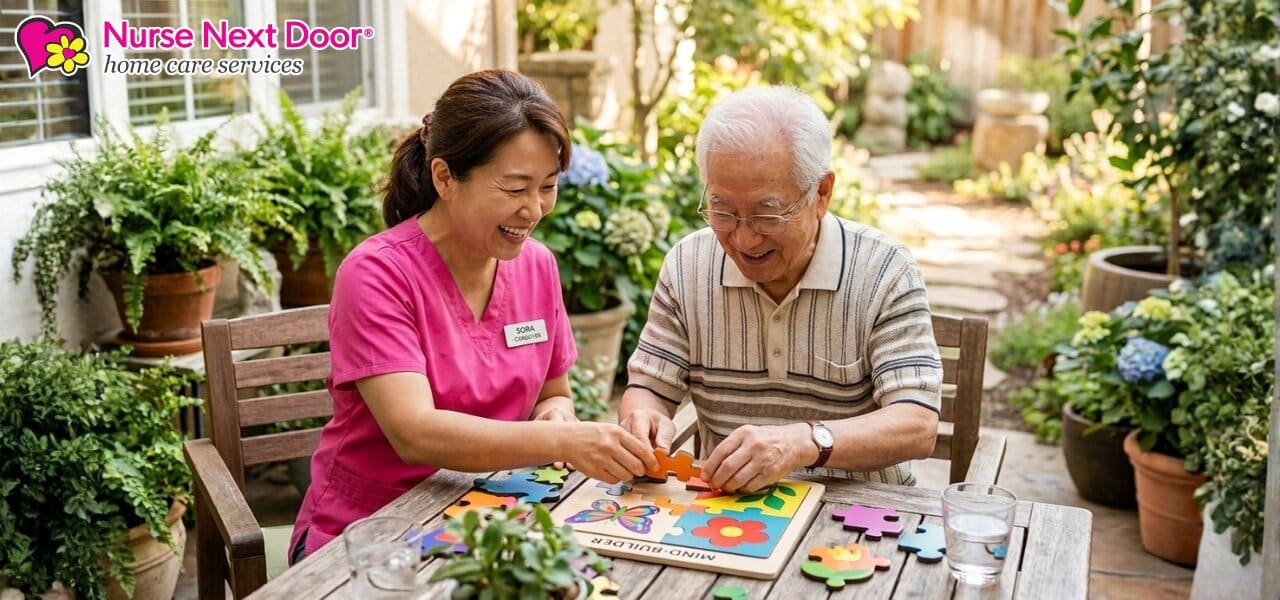
Puzzle solving is great for seniors with mild memory loss. Jigsaw puzzles require you to observe visual patterns, shapes, and spatial relationships. Completing puzzles gives you a strong sense of accomplishment, too, and it boosts your confidence. These games are ideal for senior memory loss care because they combine mental stimulation with fun.
Creative Activities That Engage the Brain
Creative activities make many brain regions work at the same time. When you’re drawing, painting, crafting, or playing music, you’re using both emotional and cognitive centers of your brain. Studies indicate that music therapy works. When seniors listen to familiar songs, the lyrics and beats trigger emotional memories. Some seniors with Alzheimer’s disease can still remember lyrics from songs they learned decades earlier.
Physical Activities That Support Brain Health
Exercise pushes more blood to the aging brain and delivers more oxygen and nutrients to it. Seniors don’t need to undertake very tough exercises. They can perform light activities like walking, stretching, chair yoga, and tai chi. These activities keep them strong, and they encourage the release of chemicals that improve memory. Even a short walk outdoors will help a lot. In-home seniors care services help your loved ones stay physically active while ensuring safety.
Effective Ways to Deal with Aggression in Dementia Patients.
Being around people is another powerful brain stimulant. Conversations need you to use your listening, memory recall, and emotional interpretation at the same time. These interactions provide a massive stimulus for your mind. Book clubs and family discussions make seniors share their old memories. Reminiscence therapy is also great for reducing memory problems. Feelings of isolation are a big part of memory loss, and social interactions take care of that too.
How Do Caregivers Incorporate Brain-Boosting Activities in Senior Care?
Caregivers may change your routine in a way that automatically starts helping you with memory loss. For example, your caregiver might ask you to help them plan a meal, sort your photographs, or complete a simple puzzle. With this approach, you’ll get
short, regular sessions of stimulation. They also assist and encourage seniors to play brain games that can keep them mentally sharp.
Consider Nurse Next Door McLean’s Seniors Care Services
Nurse Next Door provides a comprehensive range of in-home care services for seniors in Mclean with memory loss and dementia. Our team has the training, experience, and expertise to provide personalized services like:
- Assistance with daily activities such as bathing, dressing, cooking, grooming, grocery shopping, and light housekeeping
- Managing difficult behaviors (e.g., aggression) and facilitating communication
- Minimizing risks at home, and preventing falls and wandering
- Specialized transportation and mobility support
- Medication reminders
- Companionship and emotional support
Besides this, customize and adjust the care plan based on the stage of dementia. If you’re looking for the right in-home Alzheimer’s, dementia, or memory care services to keep your loved one mentally sharp and stimulated, call us today at (703) 774-9421.
FAQs
How often should seniors engage in brain-boosting activities?
Even short sessions of games, reading, and conversation can go a long way.
What simple memory games can seniors play at home?
You can consider card matching games as well as jigsaw and crossword puzzles.
Can nutrition and hydration improve brain function in seniors?
Yes. You should consider eating fruits, vegetables, whole grains, and healthy fats. Besides this, it’s important to keep yourself hydrated.