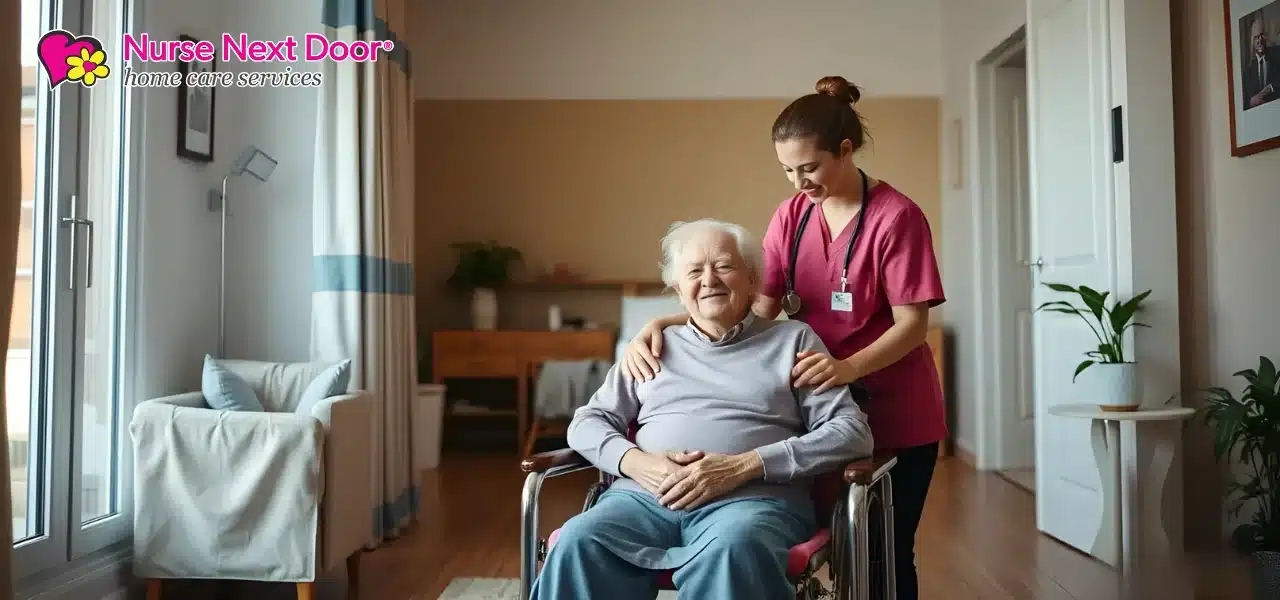
Effective Ways to Deal with Aggression in Dementia Patients.
Dementia Care
 By Nurse Next Door January 28, 2026

Aggressive behaviors are common in Alzheimer’s and dementia patients, affecting the quality of life and well-being of both the patient and family caregivers. During the course of their illness, around 96% of dementia patients will display severe aggressive behavior on one or more occasions. Such emotionally explosive situations complicate effective care, jeopardize the safety of everyone involved, and contribute to caregiver stress and burnout.
Dealing with aggressive behaviors in dementia patients in the right way improves these outcomes. It also protects the physical and mental health of both your loved one and your family. In this article, we’ll discuss some of the effective ways to deal with aggression in dementia patients and how home care providers like Northern Virginia Nurse Next Door can provide life-changing dementia care.
Understanding Aggression in Dementia
Aggression in dementia patients refers to verbal or physical behaviors that appear hostile, threatening, or combative. Dementia-related aggression occurs when the person’s brain can no longer properly process information, regulate their emotions, or communicate their needs. It is important to keep in mind that aggression is a behavioral symptom of dementia, not a personality trait.
What Causes Aggressive Behavior in Dementia Patients?
These behaviors are typically unintentional and driven by neurological changes, cognitive decline, confusion, anxiety, fear, frustration, unmet needs, or environmental stressors. In other words, they are not driven by a conscious intent to harm anyone. They are almost always triggered by what is going on around them at that very moment. Some of the common triggers include:
- Confusion or disorientation
- Inability to express themselves
- Fear or perceived threats
- Physical discomfort or pain
- Excessive fatigue
- Overstimulation
- Loss of control or Independence
What Does Dementia-Related Aggression Look Like?
Aggression can manifest in many different ways, such as.
Verbal Aggression
Verbal aggression is when the person with dementia yells, curses, or uses insulting or threatening language toward a caregiver or family member. They may accuse their caregiver of lying to them.
Physical Aggression
Frequently, dementia patients will show physical resistance during personal care, like normal, everyday activities such as bathing, using the toilet, or getting dressed. They may push the person providing dementia home care away, slap at their hands, or even attempt to hit or kick them.
Example: While being assisted to change their clothes, a person with dementia might suddenly hit their caregiver because they don’t understand what’s happening or recognize them.
Why In-Home Alzheimer’s Care in Chantilly Focuses on Establishing a Daily Routine
Aggression at Meal and Medication Times
Another very common situation where dementia patients exhibit aggressive behaviors is during meal times or when they are being given medication. Often, their resistance is caused by confusion, changes in their ability to smell and taste, or difficulties in swallowing.
Example: The person may refuse their medication and become angry. They may knock their pills out of their caregivers’ hands and yell that they’re being poisoned.
Unmet Needs May Lead to Aggression
When a person cannot verbalize feelings of pain, hunger, or tiredness, aggression may be their only form of communication.
Example: A patient with an untreated urinary tract infection suddenly becomes irritable and physically aggressive, despite being previously calm.
Important Insight
Aggression in dementia is communication, not intentional defiance. What they are often trying to say is things like:
- “I’m scared.”
- “I don’t understand.”
- “I’m in pain.”
- “I need control back.”
Recognizing aggression as a symptom of the disease can help caregivers respond with proven de-escalation strategies, instead of prolonging the episode with a confrontation.
Client-Centered Communication Strategies
Professionals who specialize in dementia care are experienced enough not to take these behaviors personally. They also have the training to employ de-escalation techniques that can cool down a heated situation.
Calm, Simple Language
Communicating with someone with dementia can be tricky. Often, how you say something is just as important as what you are saying.
- Speak slowly
- Maintain a calm tone of voice
- Enunciate clearly
- Use short sentences and simple language
- Never argue or raise your voice
Non-Threatening Body Language
Your physical posture and gestures communicate much more than you might think. If you appear agitated or threatening, the dementia patient may respond with even more aggression.
Always maintain gentle eye contact and keep an open posture. To avoid startling them, approach slowly from the front, where they can see you clearly, and avoid any sudden movements. Use non-confrontational gestures that aren’t likely to make them feel threatened.
Validation, Not Correction
A person with dementia who is in a heightened emotional state doesn’t want to hear how wrong they are or how they’re overreacting. As dementia progresses, the person’s brain loses the ability to process logic, recognize time or place, or understand being corrected. When a person with dementia is corrected or contradicted, it can actually increase their confusion. The resultant embarrassment can trigger agitation or aggression. Instead, reduce resistance by acknowledging their emotions. This helps them feel heard and understood.
Trained and experienced professionals typically employ the principles of validation therapy to soothe agitated dementia patients. In simplest terms, validation therapy allows you to communicate with someone who has dementia by accepting their feelings as real, even if what they are saying is not factually true. In other words, you are meeting them where they are emotionally, instead of correcting them or arguing with them. Remember, the goal is not to “fix” their memory – the goal is to reduce their fear, anxiety, and frustration.
Redirection and Distraction
One of the most effective ways to deal with a person who is displaying aggressive behaviors is to simply get them out of the moment by having them focus on something else. In practice, this might look like offering them different choices if their current situation is upsetting them.
You could also try a change of environment by moving to a different room or taking a walk. Sometimes, the best way to calm them down is to engage them in some soothing activity, such as listening to music or offering them one of their favorite objects.
How to Optimize the Home Environment to Reduce Aggression
As stated earlier, dementia-driven aggression is often the result of feelings like confusion or overstimulation. Some simple home modifications to avoid aggression in dementia patients include:
- Maintain adequate, yet soft and natural lighting throughout the home.
- Reduce clutter, because it makes familiar and favorite things harder to find.
- Even better, keep their favorite things in plain sight.
- Cut down on the noise – loud or unpleasant sounds can startle or irritate someone with dementia.
- Simplify the decor – no loud or violently-clashing colors. Think warm, neutral earth tones.
- Have a consistent daily routine, so the person knows what to expect.
Best Care Practices
While family members might feel overwhelmed when their loved one with dementia acts out, professional caregivers are specially trained to remain calm, patient, and reassuring.
Meeting Their Physical and Emotional Needs: Even as their disease robs them of memory and the ability to verbalize, a person with dementia still has the same basic needs as the rest of us.
Physical Needs: Always monitor the person for pain, hunger, thirst, and bathroom needs.
Emotional Needs: Especially in the early stages of the disease, the person may become frustrated if they feel as if they have lost control over their own life. Wherever possible, let them make decisions. Listen to them. Acknowledge their right to feel as they do.
Aim for Meaningful Engagement: Even the smallest participation in their life can feel like a major win. To help a person with dementia feel as if they still matter and that they still contribute, involve them in simple yet meaningful tasks.
- Basic chores – folding towels or setting the table.
- Pet therapy – This allows them to connect with another living being, without conversational demands.
- Listening to music – Hearing their favorite songs can instantly boost their mood.
These kinds of tasks can help redirect their attention away from what might be agitating them.
Avoiding Common Pitfalls
Every person with dementia is different, so there will be a lot of trial and error. But there are some general suggestions.
- Don’t argue or correct them, because this just increases their confusion and agitation. Validation is a far more effective strategy.
- Don’t ignore their triggers – physical, emotional, or environmental – because these can escalate aggressive behaviors.
- Don’t rush caregiving tasks – if you try to hurry, it can be stressful for both the patient and you as the caregiver. Moving at a slow, calming pace is a much better option.
- Avoid overstimulation – Aggression can often be a response to sudden changes, loud noises, complicated activities, or even too many visitors.
Alzheimer’s and Dementia Care Facilities Versus In-Home Care
Many families turn to Alzheimer’s and dementia care facilities, but there may be an alternative to consider before you take that drastic step. Experienced and expert in-home dementia care can be the solution you have been looking for. It allows your loved one to stay at home in familiar surroundings and around their family, while providing the necessary care and support they need. Compared to Alzheimer’s and dementia care facilities, the benefits of in-home dementia care include personalized support, flexible care plans, more independence, and dignified living.
How Nurse Next Door Helps with Aggressive Dementia Behaviors
Dementia is a progressive disease, and unfortunately, things are always going to get worse. If you feel that your loved one’s needs and behaviors exceed what you can manage on your own, there is no shame in asking for help. When things have reached that point, your best option may be specialized support. If the person’s aggression poses safety risks to themselves or others, you absolutely need professional intervention.
The good news is that you’re not alone. Nurse Next Door Mclean is there for your loved one with dementia and your entire family. Our caregivers are highly-trained, experienced, and specialize in Alzheimer’s and dementia home care. We act with compassion, patience, and understanding to help your loved one age in place with dignity, comfort, and peace of mind.
If you are caring for a family member with Alzheimer’s or any other form of dementia and their behaviors have become unmanageable, let us help. Call us today at (703) 774-9421 to book a free Caring Consult.
FAQs
What are the common signs of aggression in dementia patients?
A dementia patient is considered “aggressive” if they are verbally abusive, violent, or physically resistant during care.
What should caregivers avoid when dealing with aggression?
Caregivers should not get angry or take the behavior personally. They should not raise their voice, argue with, or try to correct the person.
How can caregivers manage their own stress?
Family caregivers can manage their own stress by prioritizing needs such as sleep, time off, self-care, physical and mental well-being, counseling, support groups, and professional dementia care services.
Does the environment play a role in aggressive behavior?
Yes. A home environment that is too noisy, too cluttered, too busy, or too unpredictable can trigger aggressive behavior in a vulnerable person with dementia.