What’s the Difference between Occupational Therapy and Physical Therapy?
PT & OT
 By Nurse Next Door December 9, 2025

Every year, over Americans seek physical therapy, and the need is only expected to continue to grow in the coming years.
According to the U.S. Department of Health and Human Services, the demand for physical therapists was estimated to grow by 23% between 2012 and 2025, and 20% for occupational therapists during the same period. This makes it extremely likely that you and/or someone you care about will have the need for either or both of these services at some point, either now or in the future.
Both therapies play a key role in helping individuals age well, stay active and independent longer, and enjoy their highest possible quality of life. However, patients and their families often misunderstand which one does what.
Understanding the real difference between occupational therapy and physical therapy empowers families to choose the right support. To help you make better, more educated decisions about your care, Nurse Next Door McLean explores various aspects of in-home physical therapy vs occupational therapy in this article.
Call Nurse Next Door McLean today at (703) 774-9421 for compassionate in-home care
What is Physical Therapy?
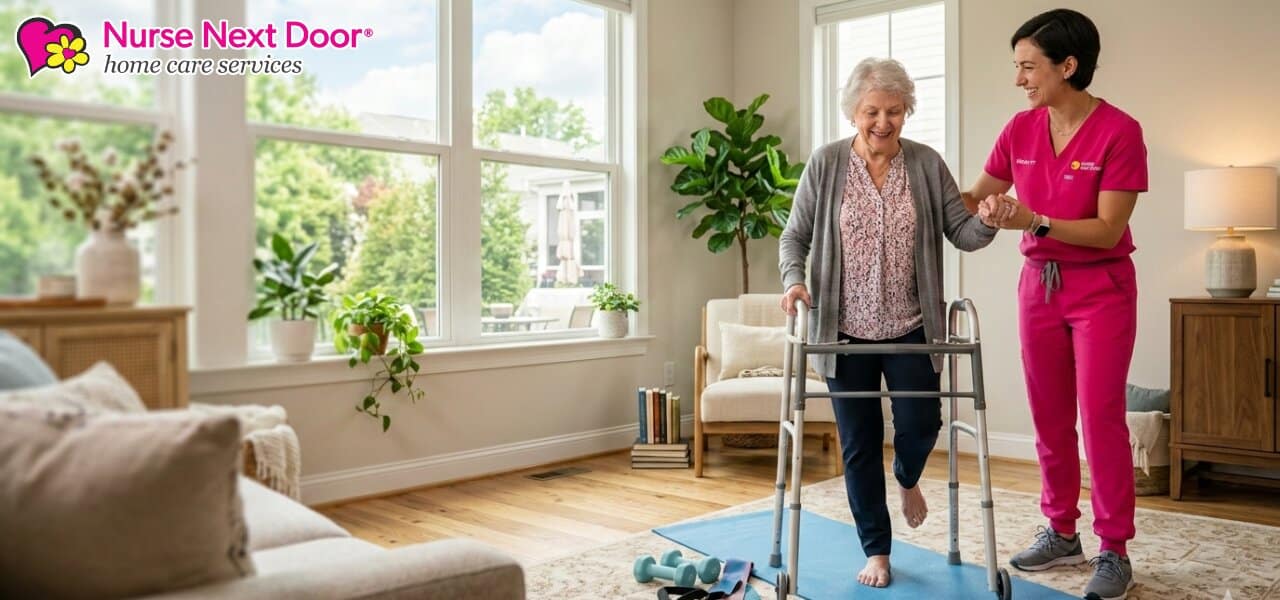
As it applies to senior care, Physical Therapy – also known as PT – is a specialized type of healthcare that helps older adults maintain or regain their physical capabilities. Typically, it addresses the loss of or reduction in function resulting from age-related conditions such as osteoporosis, arthritis, and loss of muscle power.
What are the Main Goals of Physical Therapy for Seniors?
- Restored strength – Many seniors suffer from sarcopenia, a gradual, age-related loss of muscle mass and strength.
- Reduced pain, including chronic pain.
- Improve mobility – around 25% of adults in the US are living with a disability.
- Better balance – age-related balance changes are common.
Not only can physical therapy slow age-related infirmities, but it also supports faster recovery from injury or surgery, promoting longer independence and healthier aging in place.
Physical Therapy Treatment Approaches
- Exercise
- Stretching
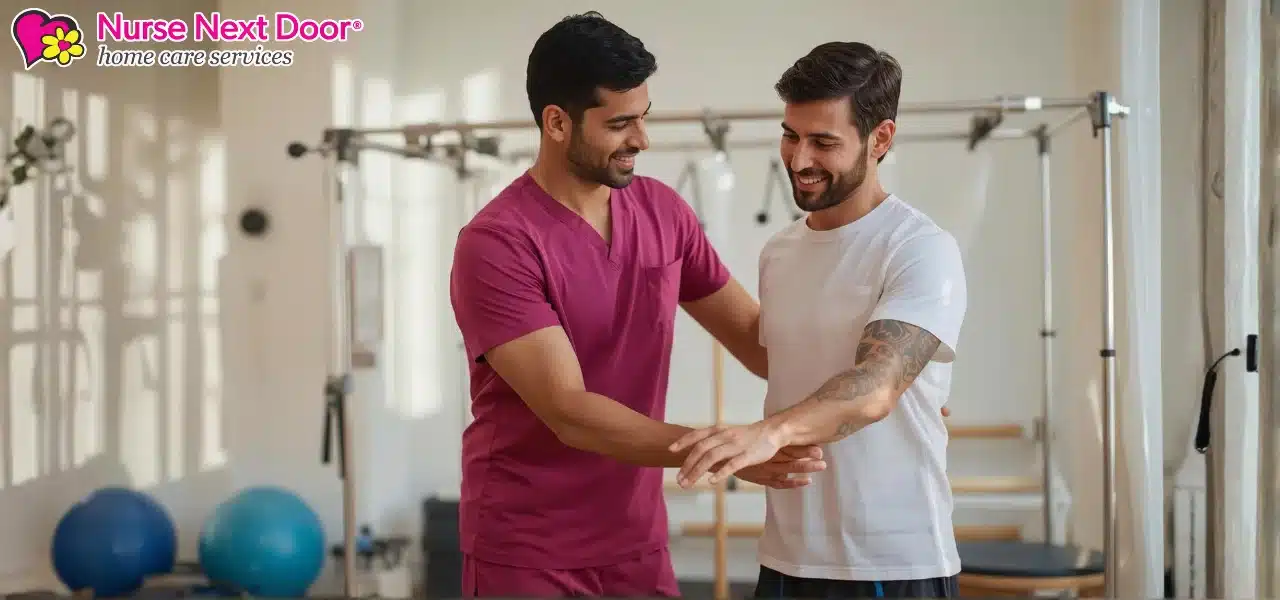
- Manual therapy
- Balance training
- Gait retraining
Examples of When Physical Therapy is Used
- Surgical recovery
- Stroke recovery
- Joint replacement
- Arthritis pain
- Falls or other injuries
- Chronic musculoskeletal conditions
What is Occupational Therapy?
When discussing senior care, Occupational Therapy (OT) is a specialized type of healthcare that focuses on helping older adults maintain or regain their ability to perform tasks necessary for independent living. We also refer to such tasks as Activities of Daily Living (ADLs).
What are the Main Goals of Occupational Therapy for Seniors?
- Improve fine motor skills – Hand-eye coordination, pincer and precision grasping, writing, the use of tools, etc.
- Teach adaptive techniques or provide adaptive tools – Where the person’s physical ability is compromised, OT teaches new ways to do things, and/or provides specialized adaptive equipment – buttonhooks, grabbers, weighted silverware, or universal feeding/hygiene cuffs, for example.
- Modify the environment – People who have difficulty performing ADLs can benefit from practical changes to the home – decluttering, installing handrails, adding a raised toilet seat, etc.
- Promote independence – The biggest goal of OT is to allow people to live as independently as possible despite their physical or mental challenges or disability.
Occupational Therapy Treatment Approaches
- ADL training and practice
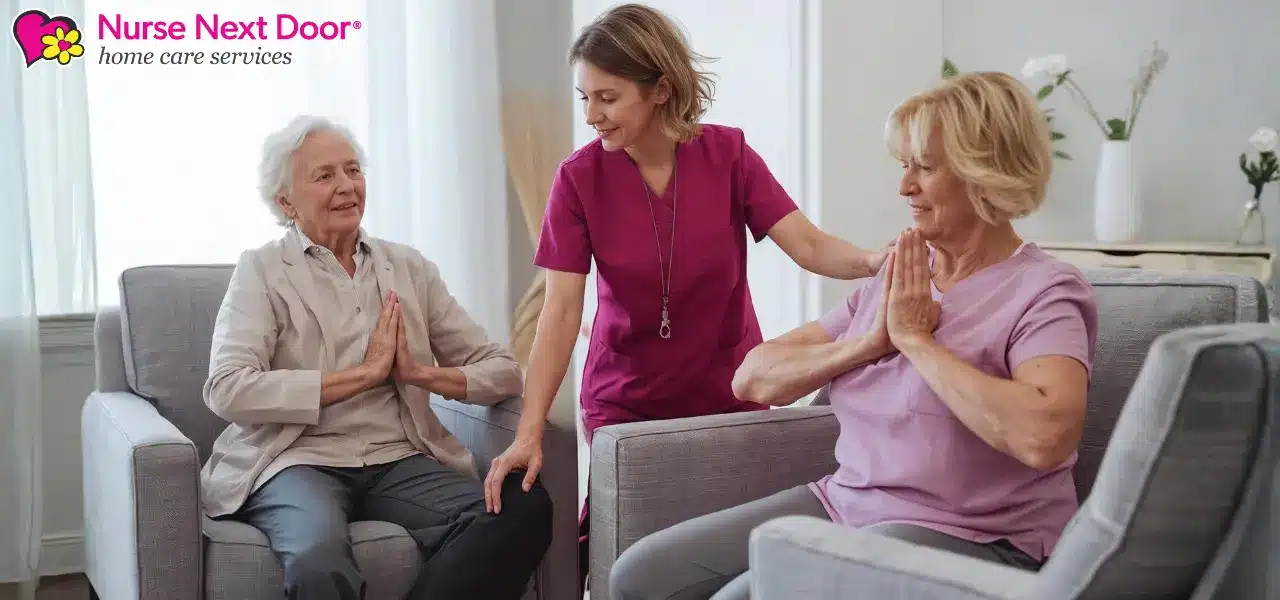
- Cognitive support
- Energy conservation techniques
- Home safety modifications
Examples of When Occupational Therapy is Used
- Strokes
- Injuries
- Progression of chronic conditions
Physical vs Occupational Therapy: Key Differences
The main difference between occupational therapy and physical therapy is their focus.
PT focuses on strength, movement, and physical recovery, while OT focuses on daily function, skill building, and safe independence.
How Both Therapies Support Senior Independence
PT and OT work together for holistic recovery, and bring the following benefits:
- Regained/improved strength
- Better mobility
- Decreased pain
- Reduced risk of falls or re-injury
- Prolonged Independence
- Increased confidence
- Maximized quality of life
An example of PT and OT working together might include a person’s recovery after a hip fracture. PT would help them regain their ability to walk, while OT helps them perform common ADLs like bathing and dressing.
All You Need to Know About Physical Therapy for Ataxia
Physical Therapy Vs Occupational Therapy: Choosing the Right Option
So which therapy is appropriate? It depends on your needs and situation.
Signs That a Senior May Need PT
- Pain
- Weakness
- Mobility problems
- Balance issues
Signs That a Senior May Need OT
- Trouble with ADLs
- Difficulty using hands
- Cognitive impairment
- Home safety concerns
If you are unsure about what type of therapy your senior loved one may need, Nurse Next Door McLean can guide you and develop the right care plan.
How Nurse Next Door McLean Helps
When it comes to physical therapy vs occupational therapy, Nurse Next Door McLean can guide you and match you with the right therapist. Whether you are recovering from surgery or working to stay active and independent as you age in place, we are by your side every step of the way.
- Matching you with licensed therapists
- Exercises to help you regain your strength and mobility
- Multiple types of therapies
- Assistance to keep you safe
- Encouragement to keep you motivated
- Home modification recommendations
- Monitoring your health
- Compassionate approach and 24/7 availability
Book a free Caring Consult with Nurse Next Door McLean now. Call us today at (703) 774-9421 to improve your quality of life.