In-Home Care Tips for Seniors Recovering from Breast Cancer
In-Home Care
 By Nurse Next Door May 21, 2026
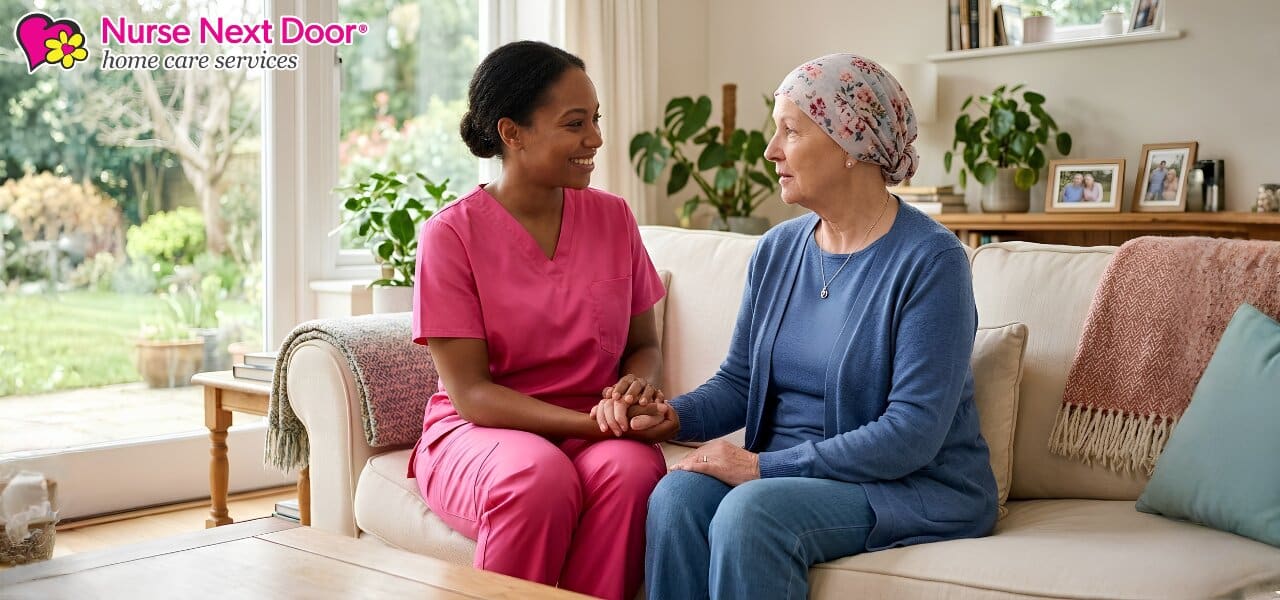
A breast cancer diagnosis at any age feels life-changing, but for older women, the recovery after surgery comes with a different set of realities. Wounds heal more slowly, and new medications may interact with the ones that they were already taking. Statistics published by the American Cancer Society show that women aged 50 and older account for 84% of invasive breast cancer cases. Many families in Vienna, McLean, and other areas of Northern Virginia struggle to figure out what to actually do once the hospital sends their loved one home. This blog article answers such questions and helps you understand the value of support provided by senior home health care agencies like Northern Virginia Nurse Next Door.
What Does Recovery Look Like for Older Women?
Whether the procedure was a lumpectomy, a mastectomy, or a mastectomy with reconstruction, the first two to four weeks tend to be the most physically demanding stretch. Healing timelines vary by patient and the type of procedure, with mastectomy patients often needing two weeks or longer before they feel even somewhat like themselves. Most surgeons advise against strenuous activity or heavy lifting for roughly the first month.
For seniors, that time required for recovery is often longer. Comorbidities like arthritis, diabetes, or heart disease can slow tissue repair. Cognitive fatigue from anesthesia tends to linger more in seniors. And even daily activities like getting dressed, with a tender chest, limited arm motion, and possibly a surgical drain, take much more time. The first goal of recovery at home is not to push through but to pace yourself.
Creating a Suitable Environment at Home
A few practical adjustments before the patient walks back through the door can prevent post-op complications and reduce frustration. Mobility assistance and wound care are part of the broader healing routine, and they become much easier when the surrounding environment supports it.
One of the most useful changes is moving frequently used items down to counter height. After surgery, reaching overhead or bending into a low cabinet can pull on the incision and the at-risk arm, so glasses, mugs, snacks, and morning medications should all be placed somewhere where she can grab them without stretching. Here are some of the other adjustments you should consider:
- A firm pillow or wedge on the bed and recliner so she can sleep slightly elevated, which eases pressure on the surgical site.
- Loose, front-opening clothing within easy reach.
- A nightlight on the path between her bed and the bathroom.
- Remove non-slip rugs if they curl at the edges.
- A small notebook and pen by her chair to log pain levels, medication times, etc.
Do you know that Nurse Next Door McLean can match you with the most suitable caregivers and RNs to help with recovery and various daily activities? Reach out to us today.
Caring for Surgical Drains
If she comes home with one or more Jackson-Pratt drains, this becomes part of the daily routine for roughly one to three weeks. Drains are common after mastectomy and axillary lymph node surgery, and they prevent fluid buildup that could otherwise lead to seroma or infection. The basic routine, which is also featured in surgeon guidelines, often goes as follows can be done effectively by the Registered Nurse (RN):
- Wash hands thoroughly.
- Pinch the tubing close to the skin with one hand to hold it steady.
- With the other hand, slide fingers down the length of the tube toward the bulb to move any clots or fluid along.
- Then open the bulb, pour the fluid into a measuring container, squeeze the bulb flat to restore the gentle suction, and snap it closed.
- Write down the amount.
- Most surgeons want this done two to four times a day, or whenever the bulb is about half full.
It’s important to pay attention to the color and quantity of what comes out. In the days following surgery, the fluid typically shifts from a deep red to pink to a pale, almost straw-colored liquid, and the total volume should drop steadily. A sudden jump in output, fluid that stays bright red, or drainage that turns cloudy yellow-green with an unpleasant smell are all reasons to call the surgical team the same day. Warning signs of infection at the drain site include redness spreading outward, warmth around the entry point, swelling, foul odor, or a fever above 101°F. A trained Registered Nurse (RN) can do the daily routine consistently, log the output accurately, and observe subtle changes.
Preventing Lymphedema
Lymphedema, the chronic swelling that can develop in the arm on the surgery side, is one of the most underdiscussed long-term complications. After a lumpectomy, the risk is very small. After a modified radical mastectomy, the risk can climb. However, early, supervised movement and a consistent home exercise routine meaningfully reduce that risk. Here are some lymphedema precautions for seniors who are recovering:
- Avoid having blood pressure cuffs, blood draws, or IV lines placed in the affected arm whenever possible, and let any new clinician or lab technician know which side had surgery before they reach for the cuff.
- Skip extreme temperatures on that arm, including hot tubs, saunas, heating pads, and ice packs.
- Treat any cut, bug bite, or hangnail promptly with soap, water, and antibiotic ointment, since infections in the at-risk arm can trigger swelling.
- Begin gentle range-of-motion exercises only when the surgeon clears them. They usually include wall-walking with the fingers, shoulder rolls, and slow arm raises.
If swelling, heaviness, or tightness appears in the hand, wrist, or upper arm, it should be reported the same day.
Support Healing and Recovery with Proper Nutrition
Surgery places enormous demand on the body’s protein stores. Studies of post-surgical nutrition consistently point out that the stress response to an operation actually accelerates the breakdown of muscle tissue, even as the body needs more building blocks to repair the surgical site. For seniors, who tend to lose muscle mass with age, that combination can leave them weaker than expected weeks after the procedure.
Dietary guidance for breast cancer patients generally recommends:
- Keeping fat intake under about 30 percent of daily calories
- Opting for monounsaturated and polyunsaturated sources
- Getting roughly 55 percent of calories from whole-food carbohydrates like oats, brown rice, fruits, and legumes
- Pushing protein intake to about 1.2 to 1.5 grams per kilogram of body weight per day to prevent muscle loss alongside any weight changes
For an older woman weighing 140 pounds (about 64 kg), that translates to roughly 75 to 95 grams of protein daily, which is more than the amount most seniors typically eat. The following are some practical ways to meet that target without going for large meals:
- Greek yogurt at breakfast.
- Eggs scrambled with cheese.
- A smoothie with milk, peanut butter, and a banana mid-morning.
- Chicken or fish at lunch and dinner.
- Cottage cheese, hummus, or hard-boiled eggs as snacks.
Based on research, the recommendation is to opt for five to nine servings of fruits and vegetables per day. Hydration matters too. Constipation is a common side effect of opioid pain medication, and water, prunes, pears, and a high-fiber breakfast cereal usually keep things moving.
Remember that supplements should not be added to the diet without checking with the oncology team first. Many vitamins, herbs, and immune boosters interact with chemotherapy, hormone therapy, or blood thinners.
Pain Management Without Overmedication
Seniors metabolize pain medications differently. The dose of an opioid that a 45-year old is taking can leave a 75-year-old groggy, constipated, and at higher fall risk. The goal of post-operative pain control in seniors is to stay ahead of the pain without becoming oversedated. Here are a few principles that tend to work well at home:
- Take pain medication on a schedule for the first 48 to 72 hours rather than waiting for pain to spike.
- Use acetaminophen as the base layer, with opioids reserved for breakthrough pain, if the surgeon agrees.
- Pair every opioid dose with a stool softener.
- Apply ice to the chest area (not the at-risk arm) in 15-minute intervals to reduce swelling and ache.
- Use a small pillow held against the chest, sometimes called a heart pillow, for support during coughing, sneezing, or car rides.
If pain suddenly worsens, especially if it is accompanied by redness, warmth, or fever, that is not a pain management issue. It’s time to call the surgical team.
Don’t Neglect Emotional Recovery
Studies tracking mental health in older breast cancer survivors have found surprisingly high rates of depressive symptoms in the months and years following treatment.
Research on psychological outcomes after breast cancer report that anxiety and depression are the two most common emotional symptoms during and after treatment. Women over 70 face greater levels of depression. It is a documented, predictable response to a hard experience, made harder by the way mastectomy and lumpectomy alter the body. The first time a woman looks at her own surgical site can be a complicated and challenging moment. Things that tend to help include:
- Letting her talk when she wants to and being comfortable with silence when she does not.
- Keeping daily routines normal where possible, since structure is grounding.
- Watching for signs that warrant professional support: persistent sleeplessness, withdrawal from people, hopelessness, or loss of interest in food and grooming.
- A referral to a therapist who specializes in oncology, or to a local breast cancer support group, can make a measurable difference.
If she is open to it, a brief daily walk, even just to the mailbox and back, lifts mood through both light exposure and gentle movement.
Why Your Need Professional Support
Besides skilled nursing services, professional senior home care in Vienna and the surrounding Northern Virginia communities can assist with meal preparation, bathing, dressing, grooming, light housekeeping, transportation to radiation appointments, and companionship of long afternoons. Research on cancer caregiving shows that families who receive structured education and outside support not only provide better day-to-day care but also experience less of the burnout that can damage relationships during long recoveries.
How Nurse Next Door McLean Supports Breast Cancer Recovery
Nurse Next Door McLean provides in-home care for seniors across McLean, Vienna, Great Falls, and the surrounding Northern Virginia communities. For families navigating breast cancer recovery, the team offers senior post-operative home care including:
- In-home wound care
- Mobility support
- Specialized transportation to radiation appointments and follow-up visits
- Assistance with various Activities of Daily Living (ADLs)
- Help with personal care, including bathing and dressing around surgical sites
- Medication reminders
- Meal preparation based on what her oncology team recommends
- Companionship and emotional support
Families can start with a few hours a few times a week during the drain period and adjust upward or downward as recovery progresses.
If you are coordinating care for a parent, spouse, or close friend recovering from breast cancer surgery, a conversation with the Nurse Next Door McLean team is a practical next step. Call us now at (703) 774-9421 to ensure your loved one’s full recovery at home.