All You Need to Know About Dementia Care in Clifton, VA, for Seniors
Dementia Care
 By Nurse Next Door June 15, 2026
Watching a parent or spouse going through memory loss is one of the hardest experiences a family can face. With more than 7 million seniors in the US now living with Alzheimer’s disease, a growing number of families are weighing options to keep them comfortable and safe at home as their condition progresses. This guide explains what quality senior dementia care looks like in Clifton, Virginia, and the surrounding communities. We’ll also help you understand why Northern Virginia Nurse Next Door in-home senior Alzheimer’s and dementia care has become the preferred choice for so many local families and how to recognize when a loved one needs help.
Key Facts and Statistics About Dementia You Should Know
- About 1 in 9 seniors in the US experience Alzheimer’s disease.
- Alzheimer’s disease accounts for 60% to 80% of all dementia cases.
- The number of seniors with Alzheimer’s disease could grow to nearly 14 million by 2060, driven largely by an aging American population.
What Is Dementia?
Dementia is not a single disease. Instead, it is a general term for a decline in memory, reasoning, language, and other thinking skills serious enough to interfere with daily life. It results from damage to brain cells that disrupts how they communicate, which in turn affects thinking, behavior, and emotions. Several neurological disorders are categorized as dementia umbrella, including vascular dementia and Lewy body dementia. Alzheimer’s disease is by far the most common form of dementia. While the two terms are often used interchangeably, Alzheimer’s is a specific brain disease, whereas dementia describes the broader pattern of symptoms it produces.
What Are the Common Symptoms and Stages of Dementia?
Dementia typically progresses through early, middle, and late stages, though every person’s experience is unique. Early signs often include forgetting recent conversations, misplacing items, or struggling to find the right words. As the disease advances, individuals may have trouble managing money, following recipes, or recognizing familiar places. In later stages, memory loss progresses and people may need help with nearly all daily living activities, ranging from dressing to eating.
How Does Dementia Affect Seniors’ Daily Life and Independence?
Dementia gradually impacts the person’s routine. Cooking a meal, taking medication on schedule, or navigating a familiar neighborhood can become confusing or unsafe. Many seniors also experience changes in mood, sleep, and judgment.
Because these changes occur slowly, families sometimes adjust without realizing how much help their loved one already needs. The right dementia care plan supports independence to a significant extent and prioritizes safety.
Reasons to Opt for In-Home Dementia Care in Clifton, Virginia
The Comfort of Home
For a senior living with memory loss, an unfamiliar environment can be deeply unsettling. Home, on the other hand, carries decades of memories. The same kitchen, the same chair by the window, the same view of the yard all provide anchors when so much else feels uncertain. Nurse Next Door McLean’s in-home dementia care lets seniors stay in that comforting space while still receiving professional support.
Minimizing Confusion and Anxiety
Moving a person with dementia into a new setting can trigger agitation, sleeplessness, and increased confusion. Staying at home preserves the daily routine, helping the brain feel grounded. Familiar smells, sounds, and routines reduce stress for the senior as well as the family.
One-on-One Personalized Dementia Care
In a facility, one caregiver may oversee many residents at once. With in-home dementia care, a dedicated caregiver focuses entirely on one person, learning their preferences, history, and triggers.
Warning Signs That Indicate a Senior Needs Dementia Care
The following warning signs often mean that it’s come to consider in-home dementia care:
- Noticeable memory loss, such as repeating questions or forgetting recent events.
- Wandering or getting lost in once-familiar places.
- Missed medications, double-dosing, or confusion about prescriptions.
- Poor nutrition, which may be accompanied by spoiled food, weight loss, or skipped meals.
- Increased confusion, especially about time, places, or familiar people.
- Social withdrawal from hobbies, friends, and family gatherings.
If several of these patterns appear together, a conversation with a healthcare provider is a smart next step.
How to Support a Loved One With Dementia?
Facilitating Communication
Clear communication with patience can make a big difference. Speak slowly, use short sentences, and maintain eye contact. Avoid arguing or correcting; instead, gently redirect when needed. A calm tone often soothes far more than the words themselves.
Establishing Daily Routines
Predictable routines reduce anxiety for people with dementia. Try to keep meals, medication, and activities at the same time each day.
Modifying the Home for Increased Safety
Small changes can prevent serious accidents. Remove trip hazards, install grab bars, improve lighting, and secure medications. Labeling rooms, and keeping frequently used items within their reach and at spots they know about, supports both safety and independence. These adjustments also help with fall prevention.
Providing Emotional Support
Dementia affects feelings as much as memory. Continue to include your loved one in conversations and activities, and provide emotional support and companionship whenever they need it.
Consider Nurse Next Door McLean for Dementia Care
Families looking for trusted senior dementia care support in Clifton, VA, and the surrounding communities often turn to Nurse Next Door McLean. Our approach is to help seniors live well at home for as long as possible. Here are the key senior dementia care services you can expect to receive:
- Personal care assistance with bathing, grooming, dressing, and toileting, handled with patience and respect.
- Medication management and reminders to ensure prescriptions are taken correctly and on time.
- Meal preparation focused on nutrition, hydration, and foods the senior enjoys.
- Companionship that eases loneliness and supports emotional health through conversations and relevant activities.
- Transportation assistance for medical appointments, errands, and social outings.
- Mobility support and fall prevention, including safe transfers.
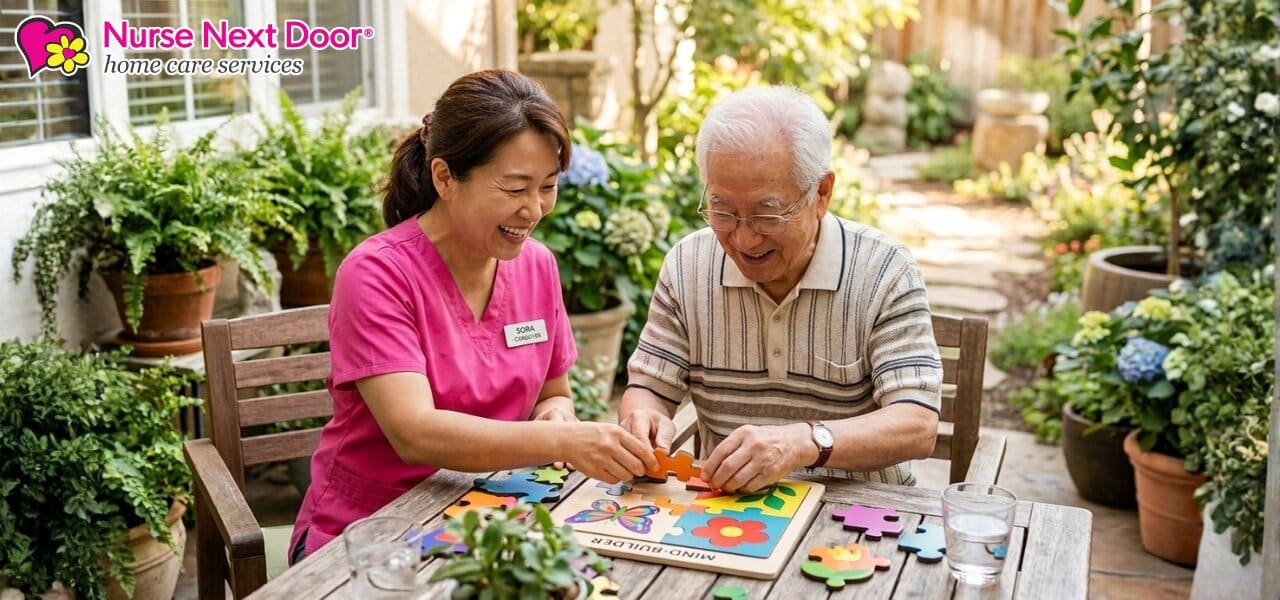
- Mind stimulating activities such as puzzles and reminiscing that provide cognitive support.
- Safety monitoring for wandering, missed meals, or other warning signs.
Reach out to Nurse Next Door McLean at (703) 774-9421 today to improve your loved one’s quality of life, comfort, safety, and level of independence.
Conclusion
Dementia changes lives, but the right support can improve your loved one’s comfort and safety at every stage of this disease. Professional senior dementia care brings expertise, structure, and compassion into your home, enabling seniors to stay in the place they love while families regain peace of mind. If you have observed these warning signs, the best time to seek guidance is now, not after an accident or a frightening moment of confusion. Early planning gives families more options and far less stress. With trusted, personalized dementia care, your loved one can continue to live with dignity, safety, and a better quality of life.
Frequently Asked Questions
When should a senior receive dementia care services?
Consider dementia care services when you notice warning signs such as memory loss, missed medications, poor nutrition, wandering, increased confusion, or social withdrawal.
What services are included in dementia home care?
Typical services include personal care, medication management, meal preparation, companionship, transportation, mobility and fall-prevention support, cognitive engagement activities, and safety monitoring. Most providers design personalized care plans that are adjusted as the individual’s needs change.
Is in-home dementia care better than assisted living?
Many families prefer in-home care because it keeps the senior in familiar surroundings, reduces confusion and anxiety, and offers dedicated one-on-one attention. In-home care also tends to be more flexible, ranging from a few hours of respite care to full-time support based on need.
How much does dementia care cost in Virginia?
The cost of dementia care in Virginia varies based on the level of support, hours of care, and the specific services required. Because pricing depends on each family’s situation, the most reliable way to understand cost is to request a personalized assessment and quote from a local provider like Nurse Next Door McLean.
Why choose Nurse Next Door McLean for dementia care?
Families choose Nurse Next Door McLean for its compassionate caregivers, personalized care plans, extensive dementia care experience, 24/7 support options, and flexible scheduling. The team focuses on maintaining independence and helping seniors in Clifton, VA, and the surrounding communities, age comfortably and safely at home.